


Wellness Drinking: How It Impacts Your Health Choices
Finding genuinely healthy beverages can be confusing for health-conscious European adults, especially when old myths still shape our choices. With wellness drinking gaining momentum, it’s time to rethink what counts as smart hydration. Discover how modern wellness drinks defy conventional ideas about alcohol and nutrition, offering functional ingredients and purposeful benefits—just as Black Friday brings even more ways to improve your lifestyle for less.
Table of Contents
- Defining Wellness Drinking And Common Myths
- Main Types Of Wellness Drinks Explained
- Key Ingredients And How They Work
- Potential Health Benefits And Risks
- Regulation, Safety, And Buying Smarter
Key Takeaways
| Point | Details |
|---|---|
| Wellness Drinking Focus | Emphasizes intentional hydration to support overall physical and mental well-being, challenging outdated notions about healthy beverage consumption. |
| Alcohol Risks | Recent research indicates that even moderate alcohol consumption may pose significant health risks, countering the belief in its health benefits. |
| Diversity of Wellness Drinks | Wellness drinks include functional, plant-based, and adaptogenic varieties, each addressing specific health needs and dietary restrictions. |
| Importance of Regulation | Consumers should prioritize products with transparent ingredient lists and verified health claims while being cautious of added sugars and artificial additives. |
Defining Wellness Drinking and Common Myths
Wellness drinking represents a holistic approach to hydration and nutrition that goes beyond traditional beverage consumption. It focuses on intentional fluid intake designed to support overall physical and mental well-being. Modern wellness drinking challenges outdated assumptions about what constitutes healthy hydration, particularly when examining alcohol consumption and its long-term impacts.
Contrary to popular belief, not all beverages contribute equally to wellness. Recent medical research demonstrates that previous assumptions about moderate alcohol consumption providing health benefits are fundamentally flawed. Stanford Medicine experts have uncovered significant evidence suggesting that alcohol poses substantial health risks, including increased cancer probability and potential long-term cellular damage.
When examining wellness drinking, several pervasive myths require critical evaluation. The notion that all drinks are equally beneficial is patently false. Alcoholic beverages, despite cultural normalization, do not provide meaningful health advantages. Harvard Health Publishing highlights the complex relationship between alcohol consumption and individual health outcomes, emphasizing that safe consumption levels remain controversial and highly dependent on personal physiological factors.
Pro Tip: Focus on water, herbal teas, and nutrient-rich beverages as primary hydration sources to support genuine wellness drinking practices.
Main Types of Wellness Drinks Explained
Wellness drinks represent a dynamic category of beverages specifically designed to support holistic health and nutrition. Contemporary beverage industry trends reveal a significant shift towards drinks that offer more than basic hydration, focusing instead on targeted health benefits and sustainable production methods.
The primary categories of wellness drinks include functional beverages, plant-based alternatives, and adaptogenic drinks. Functional beverages are specifically formulated to provide targeted health support, such as energy enhancement, immune system strengthening, and cognitive performance improvement. Plant-based milk alternatives like oat, almond, and soy have gained substantial popularity, offering nutritional diversity and catering to various dietary preferences and restrictions.
Adaptogenic drinks represent an emerging wellness drink category that incorporates herbs and natural compounds designed to help the body manage stress and maintain physiological balance. Open University resources highlight how these drinks integrate ingredients like ashwagandha, rhodiola, and ginseng to support mental resilience and overall well-being. These beverages reflect a sophisticated understanding of nutrition that goes beyond simple hydration, addressing complex physiological needs through carefully selected natural ingredients.
Pro Tip: Experiment with different wellness drink types to discover which best supports your individual health goals and lifestyle needs.
Here’s a consolidated overview of main wellness drink categories and their unique focuses:
| Drink Category | Key Focus | Example Ingredients | Common Target Benefit |
|---|---|---|---|
| Functional Beverage | Targeted health support | Probiotics, B vitamins | Energy, immune system |
| Plant-Based Alternative | Nutritional diversity | Almond, oat, soy | Lactose-free nutrition |
| Adaptogenic Drink | Stress management | Ashwagandha, rhodiola | Mental resilience |
Key Ingredients and How They Work
Functional wellness drinks derive their effectiveness from a carefully curated blend of bioactive ingredients designed to target specific physiological needs. Academic research on beverage composition reveals a complex landscape of nutritional components that go far beyond basic hydration, incorporating vitamins, minerals, probiotics, and specialized herbal extracts.

The primary categories of key ingredients include adaptogens, probiotics, essential vitamins, and botanical compounds. Adaptogens like ashwagandha and rhodiola help the body manage stress by modulating hormonal responses and supporting the nervous system. Probiotics and prebiotics play a crucial role in digestive health, supporting gut microbiome balance and enhancing immune system functionality. Essential vitamins such as B-complex, vitamin D, and antioxidants provide foundational nutritional support for metabolic processes and cellular health.
Functional drink research highlights the importance of ingredient quality and scientific validation. Botanical compounds like ginseng, chamomile, and green tea extract offer targeted benefits ranging from cognitive enhancement to energy regulation. However, consumers should remain cautious about potential high sugar content and understand that the effectiveness of these ingredients can vary based on individual physiological responses and overall dietary context.
Pro Tip: Always review ingredient lists carefully and consult healthcare professionals to understand how specific wellness drink components might interact with your personal health profile.
Potential Health Benefits and Risks
Wellness drinks offer a spectrum of potential health advantages, but understanding their nuanced impacts requires careful examination. Consumer wellness trends demonstrate a growing interest in beverages that provide targeted health benefits, including improved digestion, enhanced immunity, and sustained energy levels. These drinks represent more than just hydration - they are strategic nutritional interventions designed to support holistic well-being.
The potential health benefits of wellness drinks vary significantly depending on their specific ingredient composition. Probiotic-enriched beverages can support gut microbiome health, adaptogenic drinks may help manage stress responses, and vitamin-fortified options can address nutritional deficiencies. However, consumers must remain vigilant about potential risks, such as high sugar content, artificial additives, and the potential for overconsumption of certain stimulants or herbal compounds.
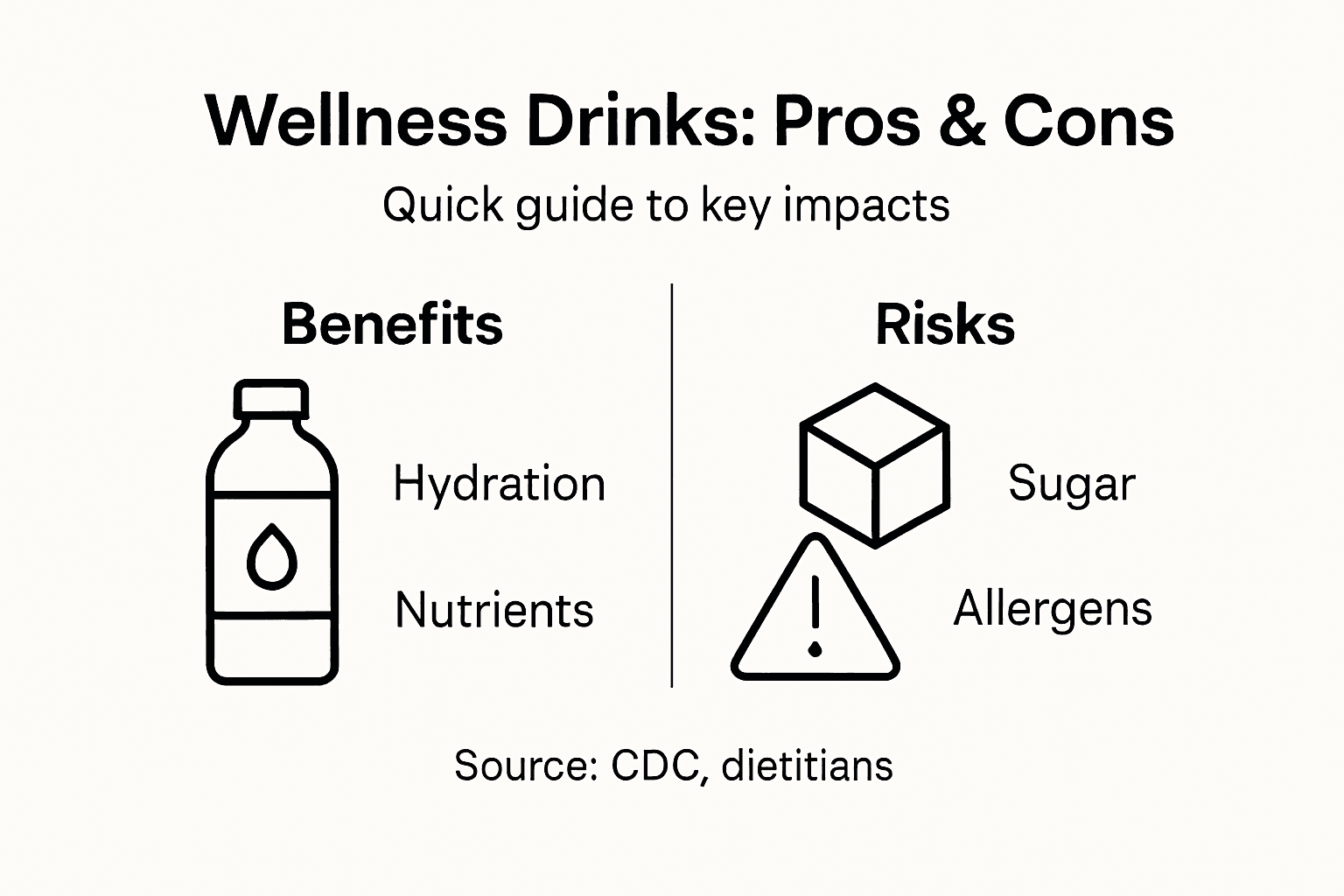
CDC health research underscores the critical importance of understanding individual health contexts when consuming any beverage with active ingredients. Certain wellness drinks, particularly those containing alcohol or high levels of caffeine, can pose significant health risks if consumed inappropriately. The key is personalized approach - recognizing that what works for one individual may not be suitable for another, and always prioritizing scientific validation and professional medical guidance.
Pro Tip: Consult a healthcare professional to develop a personalized wellness drink strategy that aligns with your specific health goals and physiological needs.
This table highlights potential health benefits and risks associated with various wellness drink features:
| Feature | Potential Benefit | Possible Risk | Who Should Monitor |
|---|---|---|---|
| High probiotic content | Enhanced digestion | Gut discomfort if intolerant | Sensitive stomachs |
| Adaptogens | Improved stress response | Hormonal effects | Those with medical conditions |
| Added vitamins | Nutrient support | Excess intake risk | Multivitamin users |
| Elevated sugar | Quick energy boost | Increased calorie consumption | Diabetics, weight watchers |
Regulation, Safety, and Buying Smarter
Wellness drink regulation represents a critical framework designed to protect consumer health and ensure product quality. UK regulatory agencies play a pivotal role in scientifically assessing health-related products, balancing innovative beverage development with rigorous safety standards. These regulatory bodies conduct comprehensive evaluations that examine ingredient composition, health claims, manufacturing processes, and potential long-term consumer impacts.
Consumers can make smarter purchasing decisions by understanding key regulatory indicators and product transparency. Critical factors include checking ingredient lists for complete disclosure, verifying scientific substantiation of health claims, and researching the manufacturer’s reputation. Pay special attention to nutritional labels, looking for third-party certifications, research-backed ingredients, and clear information about potential allergens or stimulant contents. Avoid products with excessive added sugars, artificial preservatives, or unsubstantiated health claims.
Dutch health monitoring systems emphasize the importance of comprehensive product oversight, highlighting that effective regulation extends beyond initial product approval. Consumers should remain aware that wellness drink markets continue evolving, with ongoing scientific research constantly reassessing ingredient safety and potential health implications. This dynamic landscape requires continuous consumer education and critical evaluation of emerging wellness beverage trends.
Pro Tip: Develop a habit of researching product ingredients and consulting healthcare professionals before incorporating new wellness drinks into your regular nutrition plan.
Elevate Your Wellness Drinking Experience with EQUA
Wellness drinking is about making mindful choices that truly benefit your body and mind. The article highlights the importance of focusing on beverages that support hydration, reduce stress, and provide essential nutrients without hidden risks like excess sugar or artificial additives. If you want to take control of your hydration and promote genuine wellness, choosing the right drinkware and functional beverages is key. At EQUA, we understand these challenges and offer sustainable, safe solutions designed to enhance your health routine.
Discover our extensive range of DRINKS that include functional wellness drinks crafted to nourish and support your lifestyle. Pair them with our premium Glass Water Bottles | Made in EU | Improve Hydration with EQUA to maintain purity and freshness without compromising safety. Now is the perfect moment to shop our exclusive Black Friday deals offering discounts up to 70 percent. Visit https://myequa.com today and make your wellness drinking routine both smarter and more enjoyable.
Frequently Asked Questions
What are wellness drinks?
Wellness drinks are beverages specifically designed to support holistic health and nutrition, focusing on intentional hydration and targeted health benefits.
How do functional beverages differ from adaptogenic drinks?
Functional beverages are formulated to provide specific health support, such as boosting energy or enhancing immunity, while adaptogenic drinks contain natural herbs aimed at helping the body manage stress and maintain balance.
What should I look for when choosing a wellness drink?
When selecting a wellness drink, review ingredient lists for quality and transparency, check for scientific validation of health claims, and be cautious of added sugars and artificial ingredients.
Are there risks associated with consuming wellness drinks?
Yes, potential risks can include high sugar content, artificial additives, and interactions with individual health conditions. It’s essential to consult healthcare professionals and ensure that chosen drinks align with personal health goals.
Recommended
- Why Sustainable Hydration Matters for Modern Wellness – EQUA - Sustainable Water Bottles
- What Is Wellness Lifestyle and Its Impact on You – EQUA - Sustainable Water Bottles
- Why Prioritize Hydration: Wellness, Energy, and Resilience – EQUA - Sustainable Water Bottles
- Sustainable Wellness: Transforming Everyday Health Habits – EQUA - Sustainable Water Bottles
Udostępnij
https://www.facebook.com/VitaminsForMaleEnhancement.2026
https://www.facebook.com/events/773080091895959/
https://www.facebook.com/events/2024892901410386/
https://www.facebook.com/events/1769467883734829/
https://www.facebook.com/groups/vitaminsformaleenhancement
https://www.facebook.com/groups/vitaminsformaleenhancement.2026
https://www.facebook.com/groups/vitaminsformaleenhancement.new
https://scribehow.com/viewer/Vitamins_For_Male_Enhancement__Expert_Review_Is_It_Worth_Your_Money__fcszP_FVQXO99qbE37PPFQ
https://scribehow.com/viewer/Vitamins_For_Male_Enhancement_Is_It_Safe_Read_Experts_Opinion__Ly4rtWVCTsq9aJCd_L7_cA
https://scribehow.com/viewer/Vitamins_For_Male_Enhancement_Reviews_Cost_Scam_Exposed__97Qq05TDTou7ksK7Gjd4sQ
https://scribehow.com/viewer/Vitamins_For_Male_Enhancement_Can_It_Really_Improve_Your_Confidence__xNVSoG0uTe-Eiolqra8QTQ
https://scribehow.com/viewer/Vitamins_For_Male_Enhancement_For_Sexual_Health__XkKRGod2RbCPN9F659qcLg
https://vitaminsformaleenhancement.zohodesk.com/portal/en/kb/articles/vitamins-for-male-enhancement-for-sexual-health
https://vitaminsformaleenhancement.zohodesk.com/portal/en/kb/articles/vitamins-for-male-enhancement-can-it-really-improve-your-confidence
https://vitaminsformaleenhancement.zohodesk.com/portal/en/kb/articles/vitamins-for-male-enhancement-reviews-cost-scam-exposed
https://vitaminsformaleenhancement.zohodesk.com/portal/en/kb/articles/vitamins-for-male-enhancement-is-it-safe-read-experts-opinion
https://vitaminsformaleenhancement.zohodesk.com/portal/en/kb/articles/vitamins-for-male-enhancement-expert-review-is-it-worth-your-money
https://contra.com/community/11NT0m1U-discover-effective-vitamins-for-male-enhancement
https://contra.com/community/5PsvXp3Z-guide-to-vitamins-for-mens-sexual
https://contra.com/community/nVmeLMyY-vitamins-for-male-enhancement-reviews-cost
https://contra.com/community/bq746EF8-vitamins-for-male-enhancement-is-it
https://contra.com/community/s19tGaBV-natural-vitamins-for-male-enhancement-expert
https://vitaminsformaleenhancement.alboompro.com/vitamins-for-male-enhancement
https://ollama.com/Vitamins-For-Male/Vitaminsusa
https://github.com/MichealLKean/Vitamins-For-Male-Enhancement-Can-It-Really-Improve-Your-Confidence
https://www.facebook.com/VitaminsForMaleEnhancement.2026
https://www.facebook.com/events/773080091895959/
https://www.facebook.com/events/2024892901410386/
https://www.facebook.com/events/1769467883734829/
https://www.facebook.com/groups/vitaminsformaleenhancement
https://www.facebook.com/groups/vitaminsformaleenhancement.2026
https://www.facebook.com/groups/vitaminsformaleenhancement.new
https://scribehow.com/viewer/Vitamins_For_Male_Enhancement__Expert_Review_Is_It_Worth_Your_Money__fcszP_FVQXO99qbE37PPFQ
https://scribehow.com/viewer/Vitamins_For_Male_Enhancement_Is_It_Safe_Read_Experts_Opinion__Ly4rtWVCTsq9aJCd_L7_cA
https://scribehow.com/viewer/Vitamins_For_Male_Enhancement_Reviews_Cost_Scam_Exposed__97Qq05TDTou7ksK7Gjd4sQ
https://scribehow.com/viewer/Vitamins_For_Male_Enhancement_Can_It_Really_Improve_Your_Confidence__xNVSoG0uTe-Eiolqra8QTQ
https://scribehow.com/viewer/Vitamins_For_Male_Enhancement_For_Sexual_Health__XkKRGod2RbCPN9F659qcLg
https://vitaminsformaleenhancement.zohodesk.com/portal/en/kb/articles/vitamins-for-male-enhancement-for-sexual-health
https://vitaminsformaleenhancement.zohodesk.com/portal/en/kb/articles/vitamins-for-male-enhancement-can-it-really-improve-your-confidence
https://vitaminsformaleenhancement.zohodesk.com/portal/en/kb/articles/vitamins-for-male-enhancement-reviews-cost-scam-exposed
https://vitaminsformaleenhancement.zohodesk.com/portal/en/kb/articles/vitamins-for-male-enhancement-is-it-safe-read-experts-opinion
https://vitaminsformaleenhancement.zohodesk.com/portal/en/kb/articles/vitamins-for-male-enhancement-expert-review-is-it-worth-your-money
https://contra.com/community/11NT0m1U-discover-effective-vitamins-for-male-enhancement
https://contra.com/community/5PsvXp3Z-guide-to-vitamins-for-mens-sexual
https://contra.com/community/nVmeLMyY-vitamins-for-male-enhancement-reviews-cost
https://contra.com/community/bq746EF8-vitamins-for-male-enhancement-is-it
https://contra.com/community/s19tGaBV-natural-vitamins-for-male-enhancement-expert
https://vitaminsformaleenhancement.alboompro.com/vitamins-for-male-enhancement
https://ollama.com/Vitamins-For-Male/Vitaminsusa
https://github.com/MichealLKean/Vitamins-For-Male-Enhancement-Can-It-Really-Improve-Your-Confidence
