


How to set up a home wellness space for balance 2026
Modern life pulls you in a thousand directions, leaving little room for rest or reflection. You crave a sanctuary at home where you can breathe, stretch, and reconnect with yourself without booking a pricey retreat or traveling miles away. This guide offers actionable steps to create a personal wellness space that supports your physical and mental health, transforming any corner of your home into a haven for lasting balance in 2026.
Table of Contents
- Preparing Your Space: Choosing The Right Location And Essentials
- Designing For Wellness: Minimalist And Biophilic Elements
- Establishing Rituals And Multi-Functional Wellness Activities
- Common Mistakes And Troubleshooting Your Home Wellness Space
- Enhance Your Home Wellness Space With EQUA Essentials
- What Are The Best Spots In A Home To Create A Wellness Space?
- How Can Minimalism Improve The Wellness Feel Of My Space?
- What Are Simple Rituals To Make My Home Wellness Space Effective?
- How Do I Maintain Motivation To Use My Wellness Space Regularly?
Key takeaways
| Point | Details |
|---|---|
| Holistic wellness support | A dedicated space nurtures mind, body, and spirit through intentional design and daily rituals. |
| Natural simplicity | Minimalist elements and greenery reduce stress while enhancing focus and emotional wellbeing. |
| Flexible functionality | Multifunctional furniture and adaptable layouts maximize comfort in any size space. |
| Progressive evolution | Starting small and letting your space grow organically prevents overwhelm and sustains motivation. |
| Routine integration | Daily wellness practices transform your space from a nice idea into a life-changing habit. |
Preparing your space: choosing the right location and essentials
Before you arrange cushions or light candles, you need to identify the right spot. Look for quiet, low-traffic areas with natural light and good ventilation to create an environment that naturally calms your nervous system. A corner of your bedroom, an unused guest room, or even a spacious closet can work beautifully if it offers privacy and peace. Natural light boosts mood and regulates your circadian rhythm, while fresh air keeps your mind sharp and your body energized.
Consider the size and function you need. A meditation corner requires only a few square feet for a cushion and small shelf, while a home yoga practice demands room to stretch without bumping furniture. If you want a mini gym setup, measure your space to ensure you can move freely and store equipment safely. Multifunctional furniture like storage ottomans or foldable benches helps you maximize utility without crowding the area.
Gather your essentials thoughtfully. You will need comfortable seating like floor cushions or a meditation bench, storage solutions to keep clutter at bay, and calming elements such as plants, candles, or essential oil diffusers. Lighting matters enormously, so plan for adjustable options like dimmable lamps or smart bulbs that shift color temperature throughout the day. Minimalist principles guide your choices: each item should serve a clear purpose and contribute to your sense of calm rather than adding visual noise.
Pro Tip: Start by clearing the chosen area completely, then add items back one at a time to avoid overwhelming the space with too many accessories.
Once you have selected your location, think about how the space will support wellness intentions step by step as you build new habits. Small, deliberate choices now create a foundation that evolves with your needs. Planning multifunctional and adaptable furniture lets you shift activities without rearranging everything, keeping your wellness space flexible and inviting. When you organize wellness kit essentials nearby, you reduce friction and make it easier to show up for yourself every day.
Key essentials checklist:
- Comfortable seating: meditation cushions, yoga mat, or supportive chair
- Storage solutions: baskets, shelves, or ottomans to hide clutter
- Natural elements: potted plants, stones, or wooden accents
- Lighting: adjustable lamps, candles, or smart bulbs
- Calming scents: essential oil diffuser, incense, or natural sprays
- Personal touches: inspiring artwork, journals, or meaningful objects
Designing for wellness: minimalist and biophilic elements
Minimalist design emphasizes simplicity, functionality, and the elimination of excess, creating an environment where your mind can rest instead of processing visual clutter. Clean lines, neutral color palettes, and open layouts promote mindfulness by removing distractions that compete for your attention. When you strip away unnecessary items, you make room for intention and presence, two pillars of effective wellness practice.
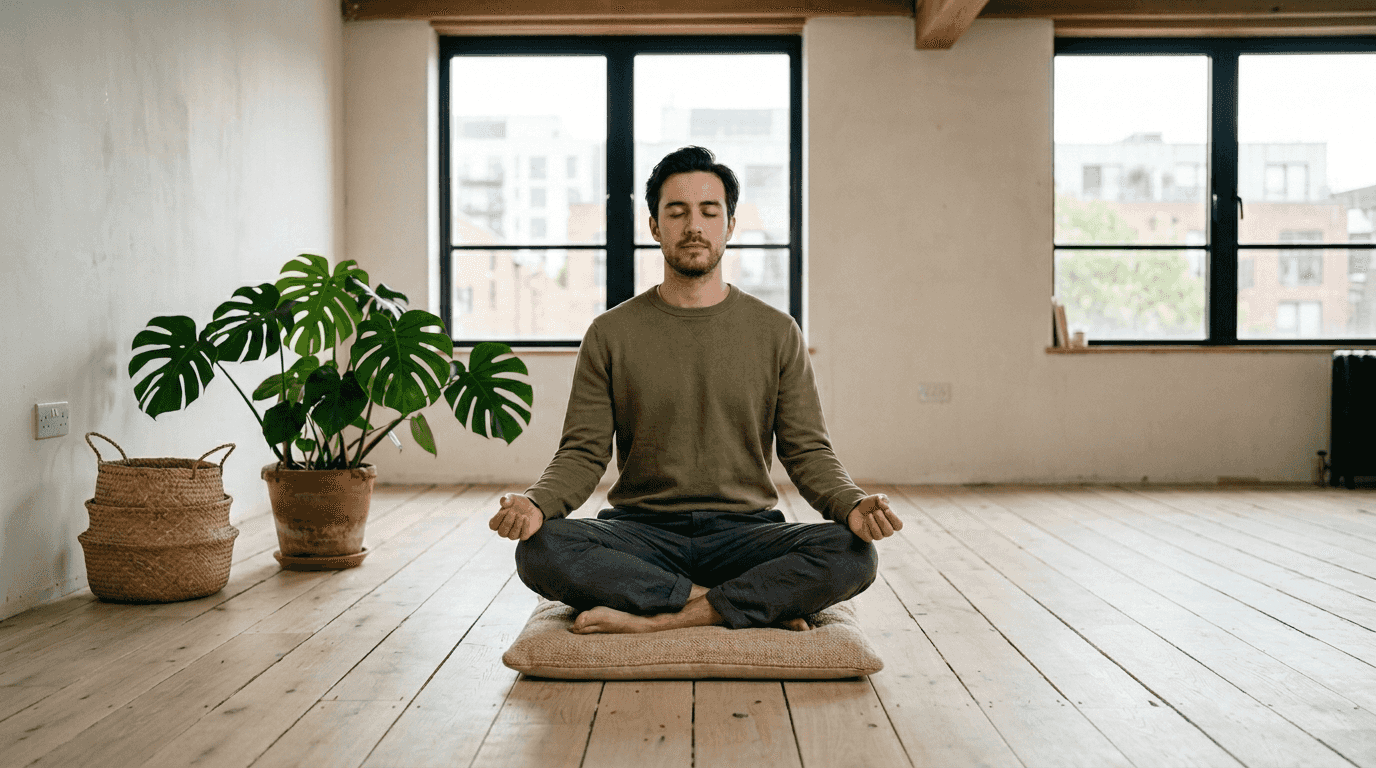
Neutral tones like soft grays, warm whites, and earthy beiges create a soothing backdrop that does not overstimulate your senses. You can add subtle pops of color through natural materials like wooden shelves, woven baskets, or ceramic planters. The goal is to design a space that feels open and breathable, allowing energy to flow freely rather than getting trapped in corners filled with unused objects.
Incorporating plants transforms your wellness space from sterile to alive. Rooms with greenery were perceived as more restorative and associated with more positive affective qualities, proving that biophilic design delivers measurable emotional benefits. Choose low-maintenance varieties like snake plants, pothos, or peace lilies if you are new to plant care. Balance is key: too many plants create visual chaos, while a few well-placed specimens bring life without overwhelming your senses.
Lighting shapes your mood and energy levels throughout the day. Natural light remains the gold standard, so position your wellness space near windows when possible. For artificial lighting, warm LED bulbs mimic sunset tones that promote relaxation, while circadian-adjusted smart bulbs shift color temperature to support your body’s natural rhythms. Dimmable options let you customize brightness for different activities, from energizing morning yoga to calming evening meditation.
Pro Tip: Layer your lighting with multiple sources at different heights to create depth and avoid harsh overhead glare that feels clinical rather than comforting.
The wellness accessories guide can help you select items that enhance your minimalist design without cluttering it. Each accessory should earn its place by supporting your wellness goals or bringing you genuine joy. When you combine minimalist principles with natural elements, you create a sanctuary that feels both intentional and effortless.

| Lighting Type | Wellness Impact | Best Use |
|---|---|---|
| Natural sunlight | Regulates circadian rhythm, boosts mood and vitamin D | Morning meditation, yoga practice |
| Warm LED bulbs | Promotes relaxation, reduces eye strain | Evening wind-down, reading |
| Circadian smart bulbs | Adapts to body’s natural cycle, improves sleep quality | All-day use, adjustable routines |
| Candles or salt lamps | Creates ambiance, encourages mindfulness | Breathwork, journaling sessions |
Establishing rituals and multi-functional wellness activities
Your wellness space reaches its full potential when you activate it with consistent rituals. Simple practices like meditation, breathwork, or journaling deepen your connection to the space and signal to your brain that it is time to shift into restoration mode. Creating a wellness retreat at home involves disconnecting from external stimulation to reconnect with yourself, making rituals the bridge between intention and transformation.
Multi-use furniture and tools keep your space adaptable for different activities. A yoga mat rolls up for storage when you want to journal at a low table, while resistance bands hang neatly on hooks until you need them for strength training. A home gym can be as simple or advanced as you like designed for long-term usability, so invest in versatile equipment that serves multiple functions rather than single-purpose gadgets that collect dust.
Step-by-step daily wellness routine:
- Begin with five minutes of breathwork or gentle stretching to ground yourself in the space.
- Set an intention for your practice, whether it is releasing tension, building strength, or cultivating gratitude.
- Engage in your chosen activity: yoga, meditation, journaling, or light exercise.
- Close with a moment of reflection, noting how you feel and what you want to carry forward.
- Tidy the space before leaving so it remains inviting for your next visit.
Maintaining a clutter-free zone requires ongoing attention but pays dividends in mental clarity. Keep surfaces clear by designating specific homes for each item, and return everything to its place after use. Integrate technology mindfully by using apps for guided meditation or workout videos, but avoid letting screens dominate the space. Your phone should support your practice, not distract from it, so consider airplane mode during wellness time.
Pro Tip: Start with one five-minute ritual and let it become automatic before adding more complexity, preventing burnout and building sustainable habits.
The wellness self-care guide offers additional strategies for weaving wellness into your daily rhythm. When you approach your space with flexibility and curiosity, it evolves alongside your needs rather than becoming a rigid obligation. The healthy lifestyle checklist can help you identify which activities deserve space in your routine and which ones you can release without guilt.
Tips for maintaining your wellness zone:
- Schedule specific times for wellness activities to build consistency and accountability
- Rotate accessories seasonally to keep the space feeling fresh and inspiring
- Limit technology to essential tools that enhance rather than interrupt your practice
- Invite natural sounds like rain recordings or singing bowls instead of distracting music
- Respect the space by keeping food, work materials, and daily clutter out of the zone
Common mistakes and troubleshooting your home wellness space
Even with the best intentions, you can sabotage your wellness space through common missteps. Overfilling the area with too many accessories, furniture pieces, or decorative items creates stress instead of relieving it. Each object competes for your attention, fragmenting your focus and undermining the calm you are trying to cultivate. The goal is a space that makes you feel grounded, not overwhelmed, so edit ruthlessly and keep only what serves your practice.
Consistent maintenance of cleanliness and order preserves the comfort and health benefits your space provides. Dust accumulates on shelves and plants, diminishing air quality and creating a neglected feeling that discourages use. Set a weekly cleaning ritual where you wipe surfaces, water plants, and refresh any fabrics like cushion covers or yoga mat towels. A clean space invites you in, while a dusty corner repels you, no matter how beautiful the design.
The goal is a space that makes you feel grounded, not overwhelmed. Simplicity and intention matter more than perfection or expensive accessories.
Lack of motivation often stems from unrealistic expectations or poorly suited lighting. If your space feels uninviting, examine whether the lighting is too harsh, too dim, or mismatched to your activities. Adjust bulb temperatures, add layers with lamps at different heights, or reposition furniture to capture more natural light. Sometimes a simple change in ambiance reignites your commitment.
Your wellness goals and lifestyle will shift over time, so your space should adapt accordingly. What works for you in winter might feel stifling in summer, and a meditation-focused setup might need to accommodate strength training as your interests evolve. Embrace flexibility by choosing modular furniture, removable decor, and storage solutions that let you reconfigure the space without starting from scratch. The sustainable wellness habits you build today should grow with you, not box you into outdated routines.
Solutions for common challenges:
- Feeling unmotivated: Refresh the space with a new plant, rearrange furniture, or try a different ritual to spark curiosity
- Space feels cramped: Remove half the items temporarily and see if you miss them; most people do not
- Lighting feels wrong: Experiment with bulb temperatures and layering until you find a combination that energizes or calms as needed
- Losing consistency: Set phone reminders, pair wellness time with an existing habit, or invite a friend for accountability
- Goals have changed: Audit your space quarterly and update equipment, layout, or decor to match your current priorities
Enhance your home wellness space with EQUA essentials
Now that you have designed and activated your wellness sanctuary, the right tools can deepen your practice and support your daily rituals. EQUA yoga mats provide the cushioning and grip you need for comfortable movement, whether you are flowing through sun salutations or settling into restorative poses. Their durable, eco-conscious materials align with the minimalist, natural aesthetic you have worked hard to create.

Hydration anchors every wellness practice, and EQUA BPA-free water bottles make it effortless to stay refreshed throughout your routine. Keep one within arm’s reach during meditation, yoga, or journaling sessions to support your body’s needs without breaking your flow. The sleek design complements your wellness space instead of cluttering it, proving that functional tools can also be beautiful. Explore EQUA wellness accessories to discover additional items like hydration tracking tools, vitamin organizers, and sleep support products that integrate seamlessly into your self-care rituals. When your space is equipped with thoughtful essentials, showing up for yourself becomes easier and more rewarding every single day.
What are the best spots in a home to create a wellness space?
What are the best spots in a home to create a wellness space?
Quiet corners with natural light, low foot traffic, and good ventilation make ideal wellness spaces because they minimize distractions and support relaxation. Spare bedrooms, underused nooks, walk-in closets, or even covered balcony areas can transform into peaceful sanctuaries with minimal effort. Prioritize privacy and a sense of separation from high-activity zones like kitchens or living rooms where family members gather frequently.
How can minimalism improve the wellness feel of my space?
Minimalism eliminates clutter and distraction, allowing your mind to focus on the present moment rather than processing visual noise. Clean lines, neutral tones, and functional items create a calm environment that promotes mindfulness and reduces stress. By removing excess, you make room for intention and give each remaining object the space to contribute meaningfully to your wellness practice.
What are simple rituals to make my home wellness space effective?
Meditation, journaling, breathwork, and gentle stretching serve as effective rituals that require minimal equipment and time. Start with just five minutes daily to build consistency, then expand as the habit becomes automatic. Personalizing practices to match your goals and preferences ensures you stay engaged rather than following routines that feel like obligations.
How do I maintain motivation to use my wellness space regularly?
Start with small, manageable steps like a single five-minute ritual and let your practice evolve gradually to avoid overwhelm. Set clear intentions for what you want to achieve, schedule specific times for wellness activities, and treat them as non-negotiable appointments with yourself. Building sustainable wellness habits requires patience and self-compassion, so celebrate small wins and adjust your approach when motivation dips instead of abandoning the space entirely.
Recommended
- How to Set Wellness Intentions for Positive Lifestyle Change – EQUA - Sustainable Water Bottles
- Sustainable wellness habits guide for lasting health in 2026 – EQUA - Sustainable Water Bottles
- What is wellness in 2026? 35% better health adherence – EQUA - Sustainable Water Bottles
- 7 Key Wellness Trends 2025 Every Health Shopper Should Know – EQUA - Sustainable Water Bottles
https://www.facebook.com/LungZen.usa
https://www.facebook.com/groups/lungzen.us
https://www.facebook.com/events/1651413276035804
https://www.facebook.com/groups/lungzen.new
https://www.facebook.com/events/945308767978282
https://form.jotform.com/LungZen/lung-zen
https://form.jotform.com/260774630450051
https://scribehow.com/viewer/Lung_Zen_Review_Benefits_Ingredients_and_Results__PTNVTFx1SrSSf1xjQEo_UA
https://scribehow.com/viewer/Lung_Zentm_Expert_Review_Is_It_Worth_Your_Money__T2jAYxUXQNO_BfmjBitbWg
https://scribehow.com/viewer/Lung_Zen_A_Natural_Way_to_Support_Lung_Function__bgtxr9lcQHKBXfzzFRPi8g
https://scribehow.com/viewer/Lung_Zentm_We_Tried_It_55_days_Beware_Buyer_Avoid_Customer_Risks__oKjaECM5QqGg8ZZsVBdq8A
https://lungzen.zohodesk.com/portal/en/kb/articles/lung-zen-review-uncovering-reviews-benefits-analysis-49
https://lungzen.zohodesk.com/portal/en/kb/articles/lung-zen-we-tried-it-55-day-s-beware-buyer-avoid-customer-risks
https://lungzen.zohodesk.com/portal/en/kb/articles/lung-zen-where-to-buy-is-it-worth-buying
https://lungzen.zohodesk.com/portal/en/kb/articles/lung-zen-review-benefits-ingredients-results
https://open.firstory.me/story/cmmxo1i0t05zi01xk3wcza6l1
https://open.firstory.me/story/cmmxqb7tk06um01xke7nyhz38
https://open.firstory.me/story/cmmxqg78606we01xkf6vrdj7c
https://open.firstory.me/story/cmmxqd9om06vd01xk3pbb2d08
https://www.grepmed.com/LungZen
https://www.facebook.com/VitalPro2026
https://www.facebook.com/groups/vitalpro.buy
https://www.facebook.com/events/3241815172664693
https://www.facebook.com/groups/vitalpro.try
https://www.facebook.com/events/3059201604273372
https://open.firstory.me/story/cmmur25m601rv01x735ahce6b
https://open.firstory.me/story/cmmur70rw01sy01x7axm33l37
https://open.firstory.me/story/cmmurxbhv03mk010jgt0g4fph
https://open.firstory.me/story/cmmus68sy03nt010j9q6pa9sy
https://scribehow.com/viewer/Vital_Protm_Review_Uncovering_Reviews_Benefits_Analysisdollar49__oXpK0InOQG6VufPPaEGLgQ
https://scribehow.com/viewer/Vital_Pro_Review_This_Supplement_Changed_Your_Life__Sc5LAkM5R96xWrXqaliDUg
https://scribehow.com/viewer/Vital_Protm_Is_It_Safe_Read_Experts_Opinion__mrPB3gcKTGGQkK80JzGe6w
https://scribehow.com/viewer/Vital_Protm_Expert_Review_Is_It_Worth_Your_Money__atQUKArBRDu9Q0YI4hfApg
https://form.jotform.com/260755007836056
https://form.jotform.com/VitalPro/vitalpro
https://ollama.com/VitalPro/Vital-Pro
https://www.grepmed.com/VitalPro
https://www.grepmed.com/VitalProusa
https://www.facebook.com/HorsePeakusa
https://www.facebook.com/groups/horsepeaknew
https://www.facebook.com/groups/horsepeakusofficial
https://www.facebook.com/groups/horsepeakusa
https://www.facebook.com/events/905225742419932
https://www.facebook.com/events/26553748277647438
https://www.facebook.com/events/912167151801905
https://horsepeak.zohodesk.com/portal/en/kb/articles/horse-peak-is-it-really-worth-your-money
https://horsepeak.zohodesk.com/portal/en/kb/articles/horse-peak-natural-support-for-cbd-gummies
https://horsepeak.zohodesk.com/portal/en/kb/articles/horse-peak-ultimate-performance-solution
https://horsepeak.zohodesk.com/portal/en/kb/articles/horse-peak-official-website-clinical-certified-100-natural https://scribehow.com/viewer/Horse_Peak_Official_Website_Clinical_Certified_100_Natural__Y_ge9mkIQRai5c8_Xr2TpA https://scribehow.com/viewer/An_InDepth_Educational_Review_of_Horse_Peak_Capsules_Including_Ingredients_Manufacturer_Claims_and_Public_Concerns__fUiVue_SQFOgPWskFUKQoA https://scribehow.com/viewer/Horse_Peak_For_Sexual_Health__-tnjP0fNThS9_Kv5F6l5Jw
https://scribehow.com/viewer/Horse_Peak_Natural_Support_for_Male_Enhancement__4KmpHLSEQQWjTsWo0ToEWg
https://www.facebook.com/Hero.Up.Male.Enhancement.get
https://www.facebook.com/groups/hero.up.male.enhancement.get
https://www.facebook.com/groups/getheroupmaleenhancement
https://www.facebook.com/groups/hero.up.male.enhancement.free
https://www.facebook.com/events/1596045938323312/
https://www.facebook.com/events/1266750478920048/
https://www.facebook.com/events/1604473057487178/
https://open.firstory.me/story/cmmycf94y01t901zg4jlmdqyn
https://open.firstory.me/story/cmmyckzx70dp901xk154ldrlj/platforms
https://form.jotform.com/260780218805054
https://form.jotform.com/HeroUpMaleEnhancemen/hero-up-male-enhancement
https://scribehow.com/viewer/Hero_Up_Male_Enhancement_Review_Boost_Male_Power_Naturally__oLUhiRkqQ0KEBp7Dq9wuFg
https://scribehow.com/viewer/Hero_Up_Male_Enhancement_Boost_Your_Energy_and_Strength__P-HgGQbkRau-GIJyj95gkg
https://scribehow.com/viewer/Hero_Up_Male_Enhancement_Advanced_Male_Support_Formula__ueOkewXnRbu03a4s3nahew
https://scribehow.com/viewer/Hero_Up_Male_Enhancement_Transform_Your_Performance_Today__pUqqojP9SkSRWd5mtL3Dxg
https://scribehow.com/viewer/Titan_Boost_Male_Enhancement_Pills_Ultimate_Guide_for_Men__pZBcYVGpTduuLi4-fldcZw
https://scribehow.com/viewer/Titan_Boost_Supplement_Review_Real_Results_for_Mens_Health__uTQONZ4aQrW6Tg3xSr8YZg
https://scribehow.com/viewer/Titan_Boost_Review_Pros_Cons_and_Real_Benefits_Explained__i_JA_jOyTZWtTJZaNuLBvQ
https://scribehow.com/viewer/Titan_Boost_Male_Enhancement_Natural_Formula_for_Maximum_Performance__g_6iR6-DS4Wad7WsyzukBA
https://scribehow.com/viewer/Titan_Boost_Review_USA_Safe_and_Effective_Male_Enhancement_Solution__kqjYrp2jRkac4iEzI57SdA
https://scribehow.com/viewer/Titan_Boost_Male_Enhancement_Natural_Formula_for_Maximum_Performance__3xIrWqn3QnStFkTvXGkv7g
https://www.facebook.com/groups/get.titan.boost.male.enhancemen
https://www.facebook.com/groups/titanboostmaleenhancementusa2026
https://www.facebook.com/groups/titan.boost.male.enhancement.official2026
https://www.facebook.com/getTitanBoostMaleEnhancementus/
https://sites.google.com/view/titanboostmaleenhancementdisco/
https://groups.google.com/g/titan-boost-male-enhancement-discount-offers-in-the-usa/c/q0kSmPGURzE
https://form.jotform.com/260762291305050
https://form.jotform.com/TitanBoostmaleenhace/titan-boost-male-enhancement
https://open.firstory.me/story/cmmvuu588001201zq2dle4sts
https://open.firstory.me/story/cmmvv82x900jk01wz0hupc9xr/platforms
https://www.facebook.com/groups/steelpowermaleenhancement.us
https://www.facebook.com/groups/steelpowermaleenhancement.2026
https://www.facebook.com/groups/steelpowermaleenhancement.usa
https://www.facebook.com/events/1394667755795902/
https://www.facebook.com/events/1317613736870611/
https://www.facebook.com/events/2723316841367674/
https://sites.google.com/view/steel-power-me-enhancement/
https://groups.google.com/g/steel-power-me-enhancement/c/4CXKtUm5Wlc
https://form.jotform.com/260712606511044
https://form.jotform.com/SteelPowerus/steel-power-male-enhancement
https://steelpowermaleenhancement.zohodesk.com/portal/en/kb/articles/steel-power-male-enhancement-review-worth-buying-or-fake-scam
https://steelpowermaleenhancement.zohodesk.com/portal/en/kb/articles/steel-power-male-enhancement-reviews-does-it-work-or-not
https://steelpowermaleenhancement.zohodesk.com/portal/en/kb/articles/steel-power-male-enhancement-happy-sex-life-is-it-worth-the-buzz
https://steelpowermaleenhancement.zohodesk.com/portal/en/kb/articles/steel-power-male-enhancement-review-is-it-really-worth-the-hype
https://steelpowermaleenhancement.zohodesk.com/portal/en/kb/articles/steel-power-male-enhancement-reviews-cost-scam-exposed
https://www.grepmed.com/SteelPowerMaleEnhancementus
https://www.grepmed.com/SteelPowerMaleEnhancementusa
https://cascadespringsnature.org/forum/topic/steel-power-male-enhancement-review-worth-buying-or-fake-scam/
https://cascadespringsnature.org/forum/topic/steel-power-male-enhancement-review-is-it-really-worth-the-hype/
https://5ghub.us/forums/topic/steel-power-male-enhancement-official-website/
https://5ghub.us/forums/topic/steel-power-male-enhancement-reviews-complaints-49/
https://scribehow.com/viewer/Steel_Power_Male_Enhancement_Reviews_Cost_Scam_Exposed__oVfn3-rmRY2hzCMFC-XmiQ
https://scribehow.com/viewer/Steel_Power_Male_Enhancement_Review_Is_It_Really_Worth_The_Hype__C_QEtqspRIO05fWZCk5GoA
https://scribehow.com/viewer/Steel_Power_Male_EnhancementHappy_Sex_LifeIs_It_Worth_the_Buzz__IxuqIDDWQSqyMw0eyHRRSQ
https://scribehow.com/viewer/Steel_Power_Male_Enhancement_Steel_Power_Male_Enhancement_Reviews_Does_It_Work_Or_Not__pyhTyU6xRq-wpu4Koto83Q
https://scribehow.com/viewer/Steel_Power_Male_Enhancement_Review_Worth_Buying_or_Fake_Scam__sLVHu5TlRjesnDTxuAxtAw
https://open.firstory.me/story/cmmotj8ey025i01y9dj2jh8hv
https://open.firstory.me/story/cmmotk939025z01y92i8c42k5
https://open.firstory.me/story/cmmotlgk500dq01yd59tc8ucs
https://open.firstory.me/story/cmmotncor00eo01yd12gra7gq
https://open.firstory.me/story/cmmotp00j00f401ydhy8zabq3
https://www.facebook.com/VitalPro2026
https://www.facebook.com/groups/vitalpro.buy
https://www.facebook.com/events/3241815172664693
https://www.facebook.com/groups/vitalpro.try
https://www.facebook.com/events/3059201604273372
https://open.firstory.me/story/cmmur25m601rv01x735ahce6b
https://open.firstory.me/story/cmmur70rw01sy01x7axm33l37
https://open.firstory.me/story/cmmurxbhv03mk010jgt0g4fph
https://open.firstory.me/story/cmmus68sy03nt010j9q6pa9sy
https://scribehow.com/viewer/Vital_Protm_Review_Uncovering_Reviews_Benefits_Analysisdollar49__oXpK0InOQG6VufPPaEGLgQ
https://scribehow.com/viewer/Vital_Pro_Review_This_Supplement_Changed_Your_Life__Sc5LAkM5R96xWrXqaliDUg
https://scribehow.com/viewer/Vital_Protm_Is_It_Safe_Read_Experts_Opinion__mrPB3gcKTGGQkK80JzGe6w
https://scribehow.com/viewer/Vital_Protm_Expert_Review_Is_It_Worth_Your_Money__atQUKArBRDu9Q0YI4hfApg
https://form.jotform.com/260755007836056
https://form.jotform.com/VitalPro/vitalpro
https://ollama.com/VitalPro/Vital-Pro
https://www.grepmed.com/VitalPro
https://www.grepmed.com/VitalProusa
https://www.facebook.com/AshwagandhaCbdGummiesus
https://www.facebook.com/groups/ashwagandhacbdgummies
https://www.facebook.com/groups/ashwagandhacbdgummiesofficial
https://www.facebook.com/groups/ashwagandhacbdgummiesusa
https://www.facebook.com/events/2883354851996084/
https://www.facebook.com/events/2090571548450549/
https://www.facebook.com/events/2621603841593852/
https://scribehow.com/viewer/Ashwagandha_Cbd_Gummies_Official_Website_Clinical_Certified_100_Natural__5PFVnw_xRQuDzwFbu4lbqw
https://scribehow.com/viewer/Ashwagandha_Cbd_Gummies_Is_It_Really_Worth_Trying__kl68rz6_R0qyL983jHAQ7A
https://vitalpromaleenhancement.blogspot.com/
https://www.facebook.com/VitalProMaleEnhancementusa
https://www.facebook.com/groups/vitalpromaleenhancementus
https://www.facebook.com/groups/vitalpromaleenhancementusa
https://www.facebook.com/groups/vitalpromaleenhancement
https://www.facebook.com/events/1442539863678281/
https://www.facebook.com/events/1657069175319691
https://www.facebook.com/events/1436274764663945/
https://instasurgexlgummies.zohodesk.com/portal/en/kb/articles/vital-pro-male-enhancement-is-it-really-worth-your-money
https://instasurgexlgummies.zohodesk.com/portal/en/kb/articles/vital-pro-male-enhancement-ultimate-performance-solution
https://vitalpromaleenhancement.zohodesk.com/portal/en/kb/articles/vital-pro-male-enhancement-is-it-really-worth-your-money
https://vitalpromaleenhancement.zohodesk.com/portal/en/kb/articles/vital-pro-male-enhancement-list-of-top-sex-pills-to-increase-sex-drive
https://vitalpromaleenhancement.zohodesk.com/portal/en/kb/articles/vital-pro-male-enhancement-official-website-clinical-certified-100-natural
https://vitalpromaleenhancement.zohodesk.com/portal/en/kb/articles/vital-pro-male-enhancement-the-benefits-of-health
https://vitalpromaleenhancement.zohodesk.com/portal/en/kb/articles/vital-pro-male-enhancement-ultimate-performance-solution
https://scribehow.com/viewer/Vital_Pro_Male_Enhancement_A_Detailed_Look_at_Ingredients_Benefits_Safety_and_Real_Value__6EXr7HetQWypsITAYVyzqA
https://scribehow.com/viewer/Vital_Pro_Male_Enhancement_For_Men_Ultimate_Performance_Blend__Targeted_Support_for_Male_Endurance_Power_and_Long-Term_Vitality__uu47esMmTZuYmhScJNQyiQ
https://scribehow.com/viewer/Vital_Pro_Male_Enhancement_Mens_Health_Support_Reviews_2026_Is_It_Worth_the_Money_or_Legit__Dont_Buy_Till_You_Read__XT46_uUmRR-fxG_KuPnbrw
https://scribehow.com/viewer/Vital_Pro_Male_Enhancement_Is_It_Really_Worth_Your_Money__1BMJrrdoRMuMJHmqypPKaQ
https://www.researchhub.com/proposal/28995/vital-pro-male-enhancement-natural-support-for-male-performance?utm_source=copy_url&utm_medium=social_share
https://www.researchhub.com/post/29009/vital-pro-male-enhancement
