


Why Use Glass Bottles: Health, Taste, and Sustainability
Finding a hydration option that fits both your style and your sustainability goals can feel surprisingly complicated, especially with glass bottles celebrated in European wellness circles for their purity and eco appeal. Yet even glass, made from bold molten silica and other minerals, comes with hidden misconceptions and choices that affect your health and the environment. Discover how understanding the true benefits and risks behind chemical inertness and microplastics helps you make smarter, seasonally inspired decisions for your daily routine.
Table of Contents
- Glass Bottles Defined And Common Misconceptions
- Types Of Glass Bottles And Key Features
- Health Benefits And Taste Preservation
- Environmental Impact And Recyclability
- Risks, Costs, And Microplastics Concerns
- Comparisons With Plastic And Other Alternatives
Key Takeaways
| Point | Details |
|---|---|
| Glass Bottles Are Not Always Pure | Glass bottles can contain microplastics from other components like caps, so evaluate the entire packaging system. |
| Borosilicate Glass Offers Durability | Choose borosilicate glass for its superior thermal resistance and longevity in active use. |
| Reusability is Key for Sustainability | Reusing glass bottles significantly lowers their environmental impact compared to single-use plastics or even recycling. |
| Prioritize Quality Closure Options | Opt for stainless steel or aluminum caps to minimize microplastic exposure from plastic-lined closures. |
Glass Bottles Defined and Common Misconceptions
Glass bottles have become the poster child for sustainable hydration in European wellness circles, but what exactly are they? A glass bottle is a container made from molten silica mixed with other compounds like calcium oxide and sodium oxide, cooled and hardened into a solid, transparent vessel. Unlike plastic, glass is chemically inert, meaning it doesn’t interact with your beverage or leach harmful chemicals into your drink. The manufacturing process fuses these minerals at extremely high temperatures, creating a material that’s fundamentally stable and non-reactive. For your lifestyle, this means what you drink stays untouched by the container itself, which matters when you’re paying attention to what goes into your body.
Here’s where things get interesting. A widespread assumption exists that glass bottles are completely pure and free from contamination because of their inert nature. However, recent research reveals a surprising twist: glass bottles can contain microplastics that don’t come from the glass itself but from the paint coating on metal caps. The glass material remains chemically clean and safe, but the manufacturing components surrounding the bottle can introduce unexpected particles into your water. This discovery challenges the narrative that glass is universally “pure” in every aspect. The good news? Understanding this distinction helps you make informed choices about your hydration. When selecting a bottle, you’re not choosing between glass or plastic as a purity contest. Instead, you’re choosing a material that handles the liquid responsibly while being aware that other packaging components require attention.
Another common misconception deserves attention: people often believe glass bottles are fragile and impractical for active lifestyles. Reality tells a different story. Modern borosilicate glass, commonly used in quality sustainable bottles, is engineered to withstand temperature changes and physical stress that would shatter ordinary glass. This type of glass has been used in laboratories and kitchens for decades precisely because of its durability. Borosilicate glass offers unique advantages for daily use, including thermal resistance and longevity that actually outlasts many plastic alternatives. For millennials in Europe juggling busy schedules between the gym, office, and social commitments, this matters. You’re not trading durability for sustainability. Another false belief suggests that glass bottles don’t insulate beverages, leaving your morning coffee cold by noon. Many contemporary glass bottles feature double-wall designs or come with insulating sleeves specifically engineered to maintain temperature for hours, matching or exceeding what plastic bottles deliver.
The sustainability narrative around glass also gets oversimplified. People hear “glass is recyclable” and assume it’s the obvious choice, without considering the full picture. Glass is endlessly recyclable without degradation of quality, meaning the material can be reformed into new bottles indefinitely. However, the energy required to produce new glass from raw materials is substantial. The real advantage emerges when glass bottles are reused multiple times before recycling, which significantly reduces their environmental footprint compared to single-use plastics. This distinction between recycling and reusing shapes how you should think about your purchase. A reusable glass bottle designed for longevity becomes more sustainable the longer you keep it in rotation rather than treating it as disposable.
Pro tip: When choosing a glass bottle, prioritize borosilicate options with sturdy construction and protective sleeves rather than thin, decorative glass that requires careful handling; this practical approach gives you durability and reliability for daily use without compromising your sustainability values.
Types of Glass Bottles and Key Features
Not all glass bottles are created equal, and understanding the different types helps you choose the right one for your daily hydration needs. The most common type you’ll encounter is soda-lime glass, which makes up roughly 90 percent of all glass production worldwide. This type combines silica, sodium carbonate, and calcium oxide, creating an affordable and durable material suitable for everyday beverage bottles. It’s chemically inert, meaning it won’t leach flavors or odors into your water or juice, and it performs reliably for most regular use cases. For European consumers focused on sustainable hydration, soda-lime glass offers a practical sweet spot between cost and performance. The second major category is borosilicate glass, which includes boron oxide in its composition. This engineered material delivers superior thermal resistance, allowing it to handle dramatic temperature swings without cracking. Borosilicate glass also resists chemical corrosion more effectively than soda-lime varieties, making it ideal for premium reusable bottles designed for longevity. If you’ve ever noticed that high-end water bottles remain structurally intact after years of daily use while cheaper alternatives chip or crack, borosilicate is typically the reason. This type costs more upfront but delivers durability that justifies the investment for eco-conscious buyers who plan to use their bottle for years. Lead glass represents a third type, though it’s primarily reserved for luxury decorative items and laboratory applications rather than everyday beverage containers, so it’s less relevant to your sustainability goals.
Beyond material composition, glass bottles vary significantly by color, size, and design features that impact both functionality and environmental benefit. Clear glass remains the most popular choice because it allows you to see your beverage and monitor hydration levels throughout the day. However, colored glass (typically amber or green) provides superior UV protection, making it better for light-sensitive beverages or if you’re storing your bottle in direct sunlight. The size spectrum ranges from compact 300-milliliter bottles perfect for gym bags to larger 1-liter variants for desk hydration. What matters for your lifestyle is matching bottle capacity to your actual daily routine. A small bottle requiring frequent refills creates unnecessary friction, while an oversized option becomes awkward to carry. Contemporary glass bottles increasingly feature practical design innovations like protective silicone sleeves, ergonomic grips, and leak-proof caps that address real usability concerns. Double-wall construction deserves special attention because it dramatically improves insulation performance without sacrificing the purity advantage of glass. This design traps air between two glass layers, maintaining beverage temperature similarly to stainless steel alternatives while preserving the chemical inertness that makes glass special. Manufacturing processes also influence quality. Bottles created from recycled glass materials called cullet reduce environmental impact compared to production from raw materials, though this varies by manufacturer and transparency about sourcing.
Key performance features distinguish bottles designed for active European lifestyles from decorative options. Chemical resistance ensures your beverage stays pure regardless of what you drink, from plain water to acidic kombucha or herbal infusions. True borosilicate glass excels here, resisting degradation even with aggressive cleaning or prolonged contact with various liquids. Thermal durability matters if you regularly switch between hot and cold beverages. Borosilicate handles temperature shock without developing internal stress fractures, while standard soda-lime glass requires more careful handling. Weight influences portability. Glass bottles naturally weigh more than plastic, though the difference decreases significantly with protective sleeves that provide structural support without adding bulk. Transparency and clarity affect the user experience and sustainability perception. Crystal-clear glass feels more premium and allows you to appreciate your beverage, reinforcing the conscious choice you made to switch from plastic. Cap quality determines leak-proofing and long-term reliability. Stainless steel caps with food-grade silicone seals outperform plastic caps, which can degrade or develop odors over time. The best bottles combine these features thoughtfully rather than emphasizing one aspect at the expense of others. When evaluating options, prioritize the material type first (borosilicate for longevity), then assess realistic design features that align with how you actually use bottles daily.
Here’s a quick-reference summary of essential glass bottle features and what they offer:
| Feature | What It Does | User Benefit |
|---|---|---|
| Borosilicate Composition | Boosts resistance to heat & shocks | Safely handles hot/cold drinks, reduces breakage |
| Silicone Sleeve | Adds exterior protection & grip | Lowers drop risk, increases carrying comfort |
| Stainless Steel Cap | Prevents leaks, resists wear | Maintains beverage purity, reduces microplastic risk |
| Double-wall Construction | Insulates and reduces condensation | Keeps drinks hot/cold, bottle doesn’t sweat |
| Colored Glass | Shields against UV exposure | Preserves sensitive nutrients in beverages |
Pro tip: Choose borosilicate glass with a protective sleeve and stainless steel cap if you want maximum durability and plan to keep your bottle for multiple years; this combination minimizes replacement frequency and reduces your long-term environmental footprint significantly.
Health Benefits and Taste Preservation
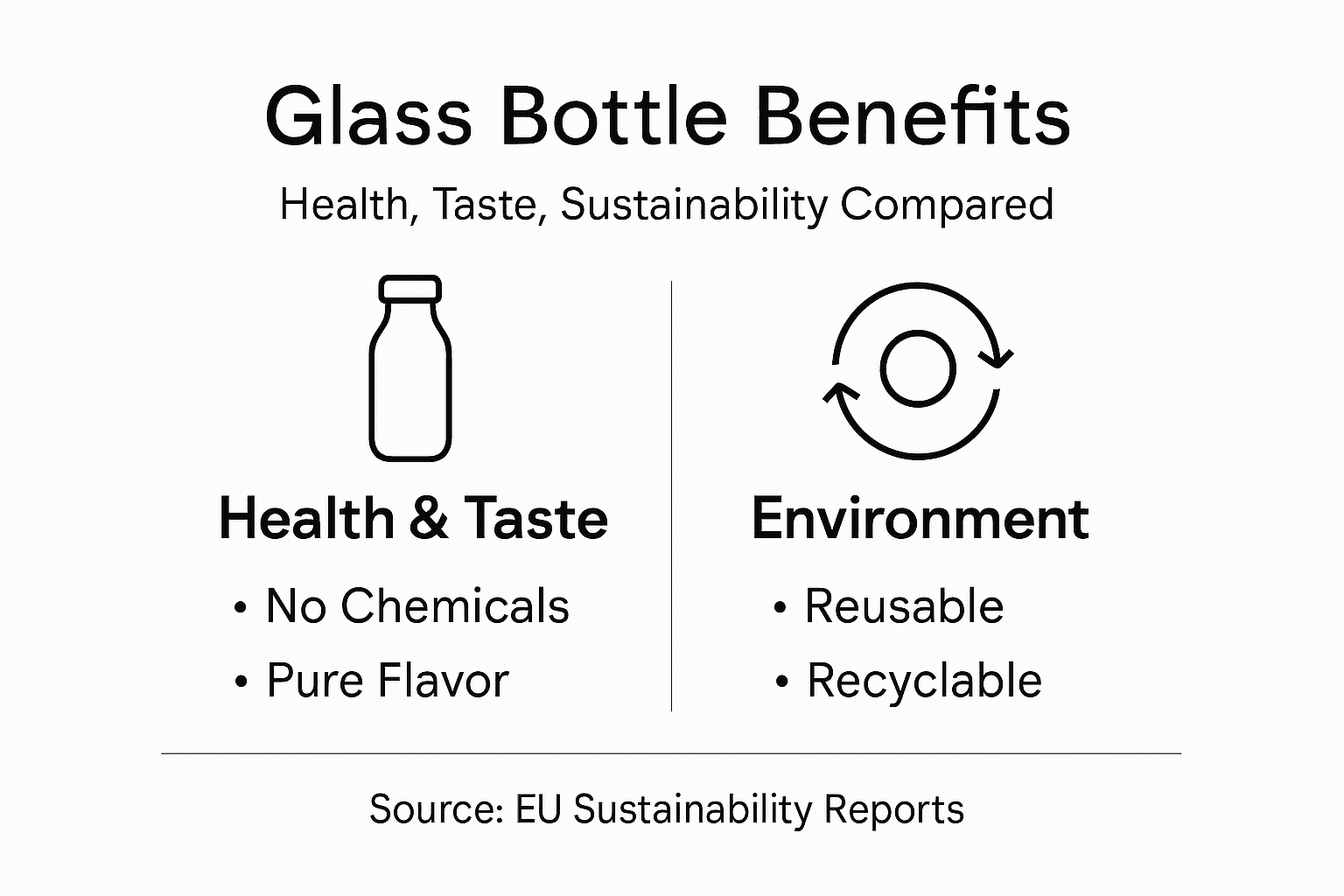
When you switch to a glass bottle, you’re not just making an environmental choice. You’re fundamentally changing how your beverages taste and how your body absorbs what you drink. Glass achieves this through a simple but profound property: absolute chemical inertness. Unlike plastic, which contains polymers that can break down and interact with liquids, glass never reacts with the contents it holds. This means your water stays pure water. Your juice retains its original flavor profile. Your coffee doesn’t absorb subtle plastic aftertaste that lingers undetectably. For health-conscious Europeans monitoring every aspect of their wellness routine, this distinction matters more than you might expect. The glass itself contributes nothing to your beverage except structural containment, which is exactly what you want. No leaching compounds. No flavor contamination. No hidden additives entering your body from packaging materials. This inert nature creates a direct line between what you pour into your bottle and what reaches your lips and stomach.

Taste preservation goes beyond avoiding contamination. Glass functions as a complete barrier to external influences that degrade beverage quality. Oxygen cannot penetrate glass, which means your sparkling water maintains carbonation far longer than in plastic containers where carbonation gradually escapes. Light sensitivity becomes irrelevant because glass blocks ultraviolet rays that would otherwise degrade sensitive beverages and their nutritional compounds. Temperature fluctuations don’t cause chemical reactions inside glass as they might in certain plastic formulations. This protection extends shelf life and maintains the nutritional integrity of what you’re drinking. If you’re investing in premium wellness beverages like cold-brewed kombucha or functional herbal infusions, glass preserves the bioactive compounds that make these drinks worthwhile. The chemical inertness of glass ensures flavors remain uncompromised from the moment of bottling through your final sip. This becomes increasingly relevant as you explore wellness trends popular in European markets. Whether you’re drinking adaptogenic mushroom brews or vitamin-enriched water, the container shouldn’t dilute or alter what you’ve chosen to consume. Glass guarantees that.
From a health perspective, the absence of chemical leaching offers concrete benefits backed by real physiology. Certain plastics release compounds like BPA and phthalates when exposed to heat, UV light, or acidic beverages. These compounds mimic hormones in your body, potentially disrupting endocrine function and affecting metabolism, reproductive health, and immune response. Glass eliminates this concern entirely because it doesn’t contain these chemicals and cannot release them under any circumstances. For women particularly, hormone-disrupting compounds in everyday products represent a significant cumulative exposure that many are working to minimize. Glass bottles remove one major source of this exposure. Additionally, glass doesn’t accumulate bacteria in microscopic scratches and pits the way plastic bottles inevitably do. Over months of daily use, plastic bottles develop a patina of bacterial colonies in surface imperfections. Glass surfaces remain smooth and non-porous indefinitely, making them hygienic for long-term reuse. This practical health advantage compounds over time. A glass bottle you use for five years stays microbiologically cleaner than a plastic alternative replaced annually. Your hydration system becomes not just safer in a chemical sense but also in a microbial sense.
Glass impermeability protects beverages from spoilage and maintains their nutritional value through multiple mechanisms working simultaneously. The absence of interaction between glass and liquid means nothing leaches into your drink and nothing from your drink damages the container. This mutual non-interference creates a stable preservation environment. Beverages in glass bottles develop fewer off-flavors over time compared to plastic. If you’ve ever noticed that water stored in plastic tastes slightly different after weeks in a cupboard, you’ve experienced plastic’s subtle flavor degradation. Glass never develops this problem. For taste buds that have developed sensitivity through intentional wellness practices, switching to glass often reveals how much flavor degradation you were previously accepting without realizing it. Your first experience drinking purely preserved water from a glass bottle might surprise you with its clarity and absence of undertones you didn’t know were there. This psychological reinforcement of your healthy choice strengthens commitment to sustained behavior change.
Pro tip: Store your glass bottle filled with water in a cool, dark location to maximize preservation benefits, and rinse with hot water weekly to maintain absolute hygiene; this simple routine ensures both taste purity and microbial safety that plastic bottles cannot match regardless of how carefully you clean them.
Environmental Impact and Recyclability
The environmental story of glass bottles is more nuanced than the simple narrative of “glass is recyclable, so it’s better.” Yes, glass is infinitely recyclable without degradation of quality, meaning the same material can be reformed into new bottles perpetually. But the real sustainability advantage emerges from reusability rather than recycling alone. Manufacturing glass from raw materials requires substantial energy input to heat silica and other components to extremely high temperatures. This production phase carries a significant environmental cost upfront. However, when you reuse the same glass bottle hundreds of times before it eventually enters the recycling stream, that initial energy investment spreads across years of use, dramatically lowering the per-use environmental impact. A glass bottle you carry to the gym four times weekly and refill for two years creates exponentially less environmental burden than a single-use plastic bottle replaced monthly. The distinction between reuse and recycling fundamentally changes how you should evaluate sustainability claims. When evaluating environmental impact, reusability significantly lowers ecological footprint compared to single-use alternatives, even when accounting for washing and transportation throughout the bottle’s lifespan.
The recycling process itself presents both advantages and challenges worth understanding. Glass recycling involves collecting used bottles, sorting them by color, crushing them into cullet (recycled glass fragments), and melting them back into new bottles. Using cullet reduces energy requirements compared to starting from raw materials because crushed glass melts at lower temperatures than raw silica. A bottle made from 50 percent cullet uses roughly 50 percent less energy than one made entirely from virgin materials. This multiplier effect incentivizes robust recycling infrastructure. However, recycling rates vary dramatically across Europe. Some countries achieve 85 percent collection rates while others struggle below 40 percent. If your glass bottle ends up in a landfill rather than a recycling facility, the theoretical recyclability provides zero environmental benefit. This reality makes the reuse aspect even more critical. Your personal reuse choices matter more than the bottle’s theoretical recyclability potential. Additionally, transport logistics and cullet sourcing significantly affect overall sustainability. A glass bottle manufactured locally with high recycled content creates less environmental impact than one shipped internationally, regardless of its recyclability credentials. European manufacturers producing bottles from regional cullet represent the sustainability sweet spot.
Beyond recycling mechanics, glass bottles interact with broader waste streams and circular economy principles. When you purchase a reusable glass bottle from European manufacturers, you’re supporting localized production that reduces transportation emissions. This contrasts sharply with plastic bottles manufactured in Asia and shipped globally. Over the bottle’s lifetime, lower transportation emissions add up meaningfully. Additionally, glass bottles don’t contribute to microplastic pollution, which has become a critical environmental concern. Microplastics from degrading plastic bottles accumulate in oceans, soil, and even drinking water globally. This pollution vector doesn’t exist with glass. While glass bottles do weigh more and therefore consume slightly more fuel during transport, this disadvantage pales compared to the decades-long persistence of plastic particles in ecosystems. Glass biodegrades into harmless silica compounds if it breaks and enters natural environments, whereas plastics persist for centuries. From an aquatic ecosystem perspective, glass represents genuinely lower environmental impact. The manufacturing energy of glass matters less when you consider that plastic pollution creates permanent environmental damage that no amount of recycling can undo.
Your personal behavior dramatically influences whether a glass bottle actually delivers environmental benefits. A bottle purchased but used inconsistently might eventually end up in a landfill, wasting its manufacturing energy. Conversely, a bottle integrated into your daily hydration routine for years creates substantial positive impact relative to its production footprint. This reality-check matters for honest sustainability assessment. European wellness culture increasingly emphasizes intentional consumption over quantity consumption. A single high-quality glass bottle used consistently generates better environmental outcomes than accumulating multiple bottles. This philosophy aligns with minimalist and slow-living movements gaining traction among your demographic. By committing to one durable bottle as a permanent hydration solution rather than replacing it annually, you align personal behavior with environmental impact reduction. The bottle becomes a tool for lifestyle change rather than just a product purchase.
Pro tip: Choose a glass bottle from a European manufacturer using recycled content and commit to using it daily for at least three years; this concentrated reuse strategy maximizes environmental benefit and transforms your bottle from a product into a lasting sustainability investment.
Risks, Costs, and Microplastics Concerns
The microplastics story surrounding glass bottles reveals an uncomfortable truth that complicates the sustainability narrative. Recent research from France’s ANSES laboratory discovered something counterintuitive: glass bottles can contain higher concentrations of microplastics than plastic bottles. This finding challenges assumptions many Europeans hold about glass superiority. The source isn’t the glass itself, which remains chemically inert and incapable of shedding particles. Instead, microplastics originate from plastic paint coating metal caps and plastic components used in closure systems. When you twist the cap, tiny particles detach from degrading paint and plastic liners, eventually migrating into your beverage. This discovery matters because it highlights that sustainability isn’t simply about the primary container material. Every component touching your drink matters. A glass bottle with a poorly manufactured plastic cap becomes problematic. Meanwhile, a plastic bottle made from recycled polymers with a quality metal closure might present lower microplastic exposure. This complexity requires moving beyond simplified material choices toward comprehensive packaging assessment. For health-conscious millennials, this means asking harder questions about the entire bottle system, not just celebrating the glass portion.
The health implications of microplastics remain genuinely uncertain, which creates anxiety without clear guidance. Microplastics are microscopic plastic particles typically smaller than 5 millimeters, ranging down to nanometer scales. When ingested, they can accumulate in your digestive system, and some research suggests they may cross into your bloodstream and distribute throughout your body. However, toxicological data remains limited. We don’t yet fully understand whether specific concentrations pose health risks or how the body processes different types of plastic particles. This scientific uncertainty shouldn’t dismiss concerns but rather emphasize the precautionary principle: minimizing exposure to understudied substances makes sense even without proof of harm. The microplastic risk applies to multiple beverage sources, not just bottles. Tap water, bottled water, filtered water, and beverages across the board contain trace microplastics. Your glass bottle solution doesn’t eliminate microplastic exposure entirely. However, choosing bottles with quality metal caps instead of plastic-lined closures measurably reduces one contamination pathway. Additionally, study methodology limitations complicate direct comparisons between bottle types, suggesting that blanket conclusions about relative microplastic content require caution and further research.
Cost considerations present another practical concern worth acknowledging honestly. Quality glass bottles cost significantly more than plastic alternatives. A premium borosilicate glass bottle with protective sleeve and quality closure can cost three to five times more than an equivalent plastic bottle. For budget conscious consumers, this upfront investment creates real friction. However, cost analysis requires considering longevity. If a glass bottle lasts five years versus a plastic bottle lasting one year before degradation or breakage, you’re actually paying less per year of use. A forty dollar glass bottle used daily for five years costs approximately eight dollars yearly. A ten dollar plastic bottle replaced annually costs ten dollars yearly. The financial case for glass strengthens considerably when you plan to use bottles long-term rather than treating them as disposable. This math assumes you don’t break the glass bottle, which introduces risk. Glass bottles can shatter if dropped, especially on hard surfaces. A single accident requiring replacement eliminates years of cost advantage. For active Europeans frequently moving between gym, office, and social spaces, drop risk is realistic. Protective sleeves mitigate this risk substantially but add to initial cost. Additionally, some social situations may make carrying glass bottles awkward. Crowded public transit, outdoor activities on uneven terrain, or travel situations present breakage risks that plastic bottles simply don’t face.
Practical limitations extend beyond economics. Glass bottles weigh more than plastic, which matters if you’re carrying hydration through a busy day or traveling internationally with luggage weight restrictions. Glass can absorb flavors and colors if not cleaned properly between uses, unlike plastic’s resistance to staining. Extreme temperature variations can crack glass bottles if you move them suddenly from freezers to hot environments, requiring care that plastic bottles don’t demand. These aren’t fatal flaws, but they represent real inconveniences that affect daily usability. The sustainability choice becomes conditional rather than universally superior. Glass bottles make sense if you’re willing to commit to careful handling, can afford the upfront investment, plan to use the bottle for years, and prioritize the health benefits of chemical inertness over convenience. For someone in a chaotic lifestyle juggling multiple priorities, a high-quality durable plastic bottle might actually serve sustainability goals better than a glass bottle that gets broken and replaced repeatedly. This honest assessment matters more than ideological commitment to one material. Your actual behavior and lifestyle constraints should drive the decision.
Pro tip: When purchasing a glass bottle, prioritize those with stainless steel or aluminum caps rather than plastic-lined closures to minimize microplastic exposure from cap degradation; inspect cap quality carefully before committing to your purchase, as this often-overlooked component significantly influences overall health benefits.
Comparisons With Plastic and Other Alternatives
The choice between glass and plastic bottles isn’t straightforward when you examine the full environmental and practical picture. Plastic bottles offer undeniable advantages in weight and convenience. They weigh roughly one-tenth of glass equivalents, significantly reducing transportation emissions when shipped globally. Manufacturing plastic requires less energy than glass production, and the initial carbon footprint at the factory is substantially lower. For single-use scenarios, plastic bottles present better environmental mathematics because their lighter weight throughout the supply chain offsets their eventual disposal challenges. However, this advantage collapses when you consider reuse and end-of-life recycling. Most plastic bottles undergo downcycling, meaning recycled plastic becomes lower-quality material suitable only for non-beverage applications. A plastic bottle recycled once typically cannot become another beverage bottle but instead becomes fiber, insulation, or landfill material. Glass, conversely, recycles infinitely without quality degradation. A recycled glass bottle becomes an identical glass bottle with identical performance. This fundamental difference shifts the sustainability equation dramatically when bottles are reused multiple times. Life cycle analyses comparing plastic and glass reveal that glass’s advantages emerge primarily through reuse scenarios rather than single-use comparisons. If you plan to use one bottle for years, glass wins decisively. If you use a bottle once and discard it, plastic presents lower environmental impact.
Stainless steel bottles have emerged as a compelling middle ground gaining popularity in European wellness communities. These bottles combine durability comparable to glass with the lightweight advantages of metal. Stainless steel doesn’t leach chemicals and won’t break if dropped, addressing glass’s primary practical weakness. Insulation performance of double-wall stainless steel bottles actually exceeds glass, maintaining beverage temperature for hours better than any glass alternative. However, stainless steel introduces different sustainability concerns. Mining and processing steel requires significant energy and creates environmental damage through extraction. The recycling rate for stainless steel is higher than plastic but requires specialized infrastructure less common in some European regions than glass recycling systems. Stainless steel bottles cost more than plastic but typically less than premium glass, falling between the two options financially. For your lifestyle, stainless steel works particularly well if you value temperature retention, frequent dropping risk, or lightweight portability. The chemical inertness advantage of glass vanishes with stainless steel, though stainless steel remains food-safe. Some users notice subtle metallic taste from stainless steel, whereas glass preserves pure taste completely. The choice depends on whether durability and insulation matter more than taste purity and simplified recyclability.
Aluminum bottles represent another alternative worth considering. Aluminum recycles remarkably efficiently, with nearly 75 percent of all aluminum ever produced still in use today due to its infinite recyclability without degradation. Aluminum weighs less than stainless steel, reducing transportation emissions further. However, most aluminum bottles require internal plastic liners to prevent the metal from reacting with acidic beverages. This liner introduces the same chemical leaching concerns associated with plastic. Additionally, aluminum mining creates substantial environmental damage through habitat disruption and energy-intensive processing. The recycling advantage becomes meaningful only if aluminum bottles actually enter recycling systems. In regions with poor metal recycling infrastructure, aluminum bottles present worse environmental outcomes than glass. The taste preservation quality of aluminum depends entirely on the interior liner, not the metal. For European consumers, aluminum bottles make sense primarily in countries with robust aluminum recycling infrastructure and strong deposit return systems.
Bamboo and other natural material bottles appear increasingly in wellness retail but deserve realistic assessment. These bottles typically combine natural exterior materials with plastic or metal liners because materials like bamboo cannot directly contact beverages without degradation or chemical leaching. The natural material component becomes primarily aesthetic rather than functional. The interior plastic layer reintroduces chemical leaching concerns. Environmental benefit depends on whether bamboo is sustainably harvested and whether the plastic interior uses BPA-free materials. For health-conscious consumers, BPA-free plastic liners represent an improvement over standard plastic, but they don’t eliminate all chemical leaching concerns. Bamboo bottles appeal emotionally and aesthetically but don’t deliver superior performance compared to pure glass or stainless steel options.
The practical comparison matrix reveals that glass bottles remain optimal for specific lifestyle scenarios: you prioritize taste purity and chemical safety above all else, you plan to use one bottle for years or decades, you have reliable access to glass recycling systems, and you’re willing to accept weight and breakage risks. Plastic bottles suit occasional use, travel situations, active sports requiring durability, and budget-conscious consumers in regions with poor recycling infrastructure. Stainless steel serves people needing temperature retention, frequent portability, and durability combined with reasonable chemical safety. Your actual choice should match these criteria rather than accepting marketing claims about any single material’s superiority. Honesty about your lifestyle and priorities produces better environmental outcomes than ideological commitment to one material.
Below is a comparison of major bottle materials highlighting durability, health, and sustainability factors:
| Material | Durability & Usability | Taste Preservation & Health | Recyclability & Environmental Impact |
|---|---|---|---|
| Glass | Fragile, heavier; can last years with care | No leaching, pure taste; inert surface | Infinitely recyclable; higher energy cost, best when reused |
| Plastic | Very lightweight, resists breakage | Risk of chemical migration (BPA/phthalates); may hold odors | Downcycled, not endlessly recyclable; major source of microplastics |
| Stainless Steel | Extremely durable, lightweight; good for active use | May impart metallic taste; generally inert | Recyclable, but production energy is high; long lifespan reduces impact |
| Aluminum | Lightest, dent-resistant; liner required | Depends on liner; possible leaching | Highly recyclable, less waste; requires robust local recycling |
| Bamboo (hybrid) | Eco-friendly appearance; liner critical | Depends on interior layer; not fully inert | Compostable exterior, plastic liner persists; best with sustainable sourcing |
Pro tip: Evaluate your actual daily routine before choosing a bottle type; if you consistently carry it through gym sessions and travel, stainless steel likely serves you better than fragile glass, whereas if your bottle stays primarily at your desk or home, glass delivers superior taste and simpler recycling benefits.
Experience True Hydration With Sustainable Glass Bottles
Choosing the right hydration bottle goes beyond just convenience. As the article reveals, understanding the health, taste, and sustainability benefits of borosilicate glass empowers you to make a conscious decision that supports your wellness goals and the planet. If you are tired of chemical leaching, microplastic concerns, and bottles that break easily, it is time to switch to a durable, pure, and reusable glass bottle designed for real life.
Discover the difference yourself with MYEQUA Reusable glass water bottles | made in EU | hydration solution, crafted for longevity and taste preservation. Our selection features borosilicate glass, protective silicone sleeves, and stainless steel caps that minimize contamination risks and keep your beverages fresh. Don’t settle for breakable decorative glass or hidden microplastics from cheap caps; choose durability and purity.
Make your health and environmental commitment today by exploring our full range of Glass Water Bottles | Made in EU | Improve hydration with EQUA. Take advantage of our exclusive offers during Black Friday – EQUA - Sustainable Water Bottles and start your sustainable hydration journey now at Myequa.com. Your body and the Earth will thank you.
Frequently Asked Questions
Are glass bottles really better for health compared to plastic bottles?
Yes, glass bottles are chemically inert, meaning they do not leach harmful chemicals or flavors into beverages like some plastic containers can.
How do glass bottles preserve the taste of beverages?
Glass bottles create a complete barrier to external influences, preventing oxygen and UV light from affecting the quality of your drinks, which helps to maintain their original flavors.
What are the environmental benefits of using glass bottles?
Glass bottles are infinitely recyclable without loss of quality and have a lower environmental impact when reused multiple times before recycling, making them a more sustainable choice than single-use plastics.
Are glass bottles durable enough for daily use?
Modern borosilicate glass bottles are designed to resist temperature changes and physical stress, making them durable and suitable for active lifestyles when appropriately cared for.
Recommended
- Reasons why we love borosilicate glass – EQUA - Sustainable Water Bottles
- What Is a Reusable Bottle and Why It Matters – EQUA - Sustainable Water Bottles
- Why Choose Reusable Bottles: Health, Savings, Planet – EQUA - Sustainable Water Bottles
- How to Pick Eco-Friendly Bottles for Sustainable Living – EQUA - Sustainable Water Bottles
Udostępnij
https://www.facebook.com/BalanceBlendsMalePerformanceGummies.us/
https://www.facebook.com/events/917980850662079/
https://www.facebook.com/events/889392080245761/
https://www.facebook.com/events/937427176125201/
https://www.facebook.com/groups/balanceblendsmaleperformancegummies.usa
https://www.facebook.com/groups/balanceblendsmaleperformancegummies.us
https://www.facebook.com/groups/balanceblendsmaleperformancegummies.2026
https://sites.google.com/view/balance-blends-male-gummies/
https://groups.google.com/g/balanceblendsmaleperformancegummies/c/9faTiZLEl8Y
https://scribehow.com/viewer/Balance_Blends_Male_Performance_Gummies__Expert_Review_Is_It_Worth_Your_Money__e4ToXA1IRqqAr37fT9rT7g
https://scribehow.com/viewer/Balance_Blends_Male_Performance_Gummies_Reviews_Cost_Scam_Exposed__Xu-Zo9GETIG-EAWqlrQLcw
https://scribehow.com/viewer/Balance_Blends_Male_Performance_Gummies_Review_Is_It_Really_Worth_The_Hype__JtCQA8mKRYKKHSGiz51AoA
https://scribehow.com/viewer/Balance_Blends_Male_Performance_Gummies_My_Honest_Opinion_and_Results__o4cWR_60TZOaNUZDsRLRCg
https://scribehow.com/viewer/Balance_Blends_Male_Performance_Gummies__Can_It_Really_Improve_Your_Confidence__SMp4wLmdSGCcRJpxwxtlmw
https://balanceblendsperformancegummies.zohodesk.com/portal/en/kb/articles/balance-blends-male-performance-gummies-reviews-cost-scam-exposed
https://balanceblendsperformancegummies.zohodesk.com/portal/en/kb/articles/balance-blends-male-performance-gummies-safe-effective-male-enhancement-in-2026
https://balanceblendsperformancegummies.zohodesk.com/portal/en/kb/articles/balance-blends-male-performance-gummies-why-men-are-choosing
https://balanceblendsperformancegummies.zohodesk.com/portal/en/kb/articles/balance-blends-male-performance-gummies-boost-stamina-energy
https://balanceblendsmaleperformancegummies.alboompro.com/
https://balanceblendsmaleperformancegummies.alboompro.com/post/balance-blends-male-performance-gummies-can-it-really-improve-your-confidence
https://balanceblendsmaleperformancegummies.alboompro.com/post/balance-blends-male-performance-gummies-review-is-it-really-worth-the-hype
https://ollama.com/BalanceBlendsMalePerformanceGummies/BalanceBlendsMalePerformanceGummies
https://contra.com/community/cmkkzsswy00003578cw4bjjfy
https://contra.com/community/cmkpby95k00003573ggk2ht9d
https://contra.com/community/cmkpc0ynd000135738c78y33k
https://contra.com/community/cmkpc2o0000023573nalzz7vx
https://contra.com/community/cmkpbvuao0000357363f2xq83
https://scribehow.com/viewer/Testo_Dark_Male_Enhancement__Expert_Review_Is_It_Worth_Your_Money__b4WUi8piSsSgB28uoIJXtw
https://scribehow.com/viewer/Testo_Dark_Male_Enhancement__Is_It_Safe_Read_Experts_Opinion__5Mejqo2sQe6ovMEOO7PHrQ
https://scribehow.com/viewer/Testo_Dark_Male_Enhancement_Can_It_Really_Improve_Your_Confidence__HFSDR2qkS2CzjeBW-RkCAw
https://scribehow.com/viewer/Testo_Dark_Male_Enhancement_Reviews_Cost_Scam_Exposed__6a0zMnJcRa6Eugy0ZWZ2AA
https://scribehow.com/viewer/Testo_Dark_Male_Enhancement_Buy_Now_and_Boost_Strength_Stamina_and_Confidence__0yiQlZbASl6mXFnlPgtjWA
https://scribehow.com/viewer/Testo_Dark_Male_Enhancement_Why_Men_Are_Choosing__lBHdsbWUQNG_ayQv1sSQ6A
https://www.facebook.com/TestoDarkMaleEnhancement.Get
