


Why Choose Reusable Bottles: Health, Savings, Planet
More than 35 billion plastic bottles end up in American landfills each year, highlighting a global challenge that extends to every European community. For health-conscious adults across Europe, navigating the search for eco-friendly hydration during holiday promotions can feel overwhelming with so many choices and misleading claims. By uncovering the truth about reusable bottles and exposing common misconceptions, this guide empowers you to make confident, sustainable picks for your health and the planet.
Table of Contents
- Reusable Bottles Defined And Common Misconceptions
- Types, Materials, And Essential Features Compared
- Health And Wellness Benefits For Daily Life
- Economic Impact: Cost Savings Over Time
- Environmental Effects And Reducing Plastic Waste
- How To Switch: Common Mistakes And Success Tips
Key Takeaways
| Point | Details |
|---|---|
| Reusable Bottles Reduce Waste | Reusable bottles significantly decrease plastic waste, preventing hundreds of single-use bottles from harming the environment each year. |
| Health and Wellness Benefits | Choosing materials like stainless steel or glass minimizes harmful chemical exposure and promotes better hydration habits. |
| Cost Savings Over Time | Investing in reusable bottles can save consumers hundreds of dollars annually compared to purchasing single-use bottles regularly. |
| Adoption Challenges | Overcoming misconceptions about convenience and maintenance is key to successfully integrating reusable bottles into daily life. |
Reusable Bottles Defined and Common Misconceptions
A reusable bottle is a sustainable drinking vessel designed for repeated use, typically crafted from materials like stainless steel, glass, or BPA-free plastic. Unlike single-use containers that contribute to environmental waste, these bottles provide a practical solution for hydration while minimizing ecological impact. Bottled water consumption patterns reveal significant environmental challenges that make reusable alternatives increasingly crucial.
Common misconceptions about reusable bottles often stem from misunderstandings about their effectiveness and hygiene. Many people believe that tap water is unsafe or that reusable bottles are difficult to maintain. However, research demonstrates that in high-income countries with rigorous safety standards, tap water is generally safe and environmentally friendly. Hygiene concerns can be easily addressed through proper cleaning and maintenance techniques.
The barriers to adopting reusable bottles frequently include perceived inconvenience and portability issues. Academic research from Columbia University suggests that students, despite having access to high-quality tap water, continue using single-use plastic bottles. Factors motivating bottle usage include convenience and water intake goals, indicating that education and infrastructure can significantly influence adoption rates.
Pro tip: To maximize your reusable bottle’s lifespan and hygiene, invest in a bottle with a wide mouth for easy cleaning and choose materials that resist bacterial growth like stainless steel or glass.
Types, Materials, and Essential Features Compared
Reusable bottles come in diverse materials, each with unique characteristics and sustainability profiles. Sustainable design approaches evaluate multiple material considerations to determine optimal bottle choices. The primary materials include stainless steel, aluminum, glass, and BPA-free plastics, each offering distinct advantages for health-conscious consumers.
Stainless steel bottles excel in durability and bacterial resistance, making them ideal for long-term use. Aluminum options provide lightweight portability, while glass bottles offer pure taste without chemical interactions. BPA-free plastic bottles represent a budget-friendly alternative with improved safety standards. Life cycle assessments reveal critical environmental impacts that vary significantly depending on production, transportation, and disposal methods.
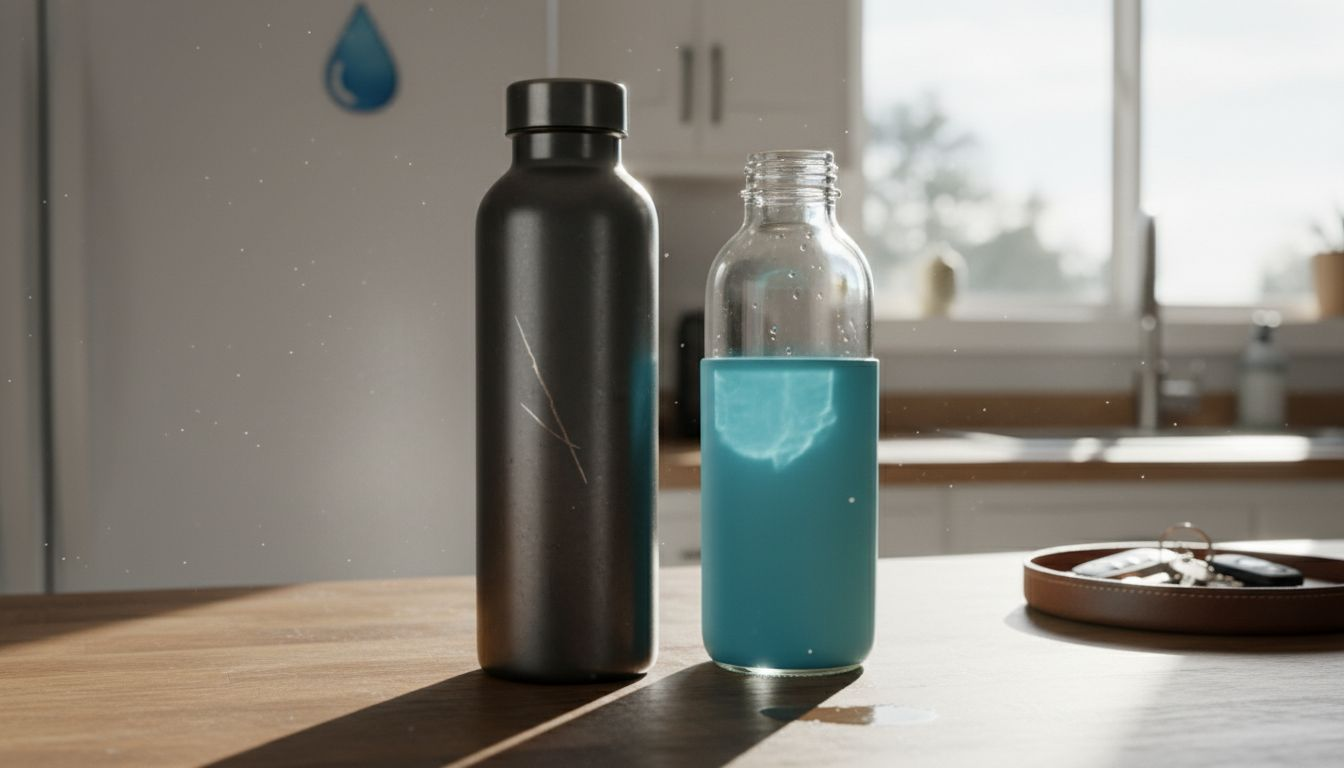
Essential features transcend material selection, encompassing design elements that enhance user experience. Key considerations include insulation capabilities, leak-proof seals, ergonomic shapes, and ease of cleaning. Advanced bottles now incorporate smart features like volume markers, temperature retention technology, and modular designs that support multiple drinking environments from office to outdoor adventures.
Pro tip: When selecting a reusable bottle, prioritize multipurpose designs that balance durability, weight, and cleaning convenience to maximize long-term usage and personal sustainability goals.
Here’s a comparison of key materials used in reusable bottles, highlighting their unique properties and sustainability impact:
| Material | Durability | Health Impact | Environmental Footprint |
|---|---|---|---|
| Stainless Steel | Very high | No chemical leaching | Low, fully recyclable |
| Glass | Moderate | Pure taste, no chemicals | Moderate, recyclable |
| Aluminum | High | May require lining | Lower, lightweight |
| BPA-free Plastic | Lower | Reduced but possible leaching | Higher, some recyclable |
Health and Wellness Benefits for Daily Life
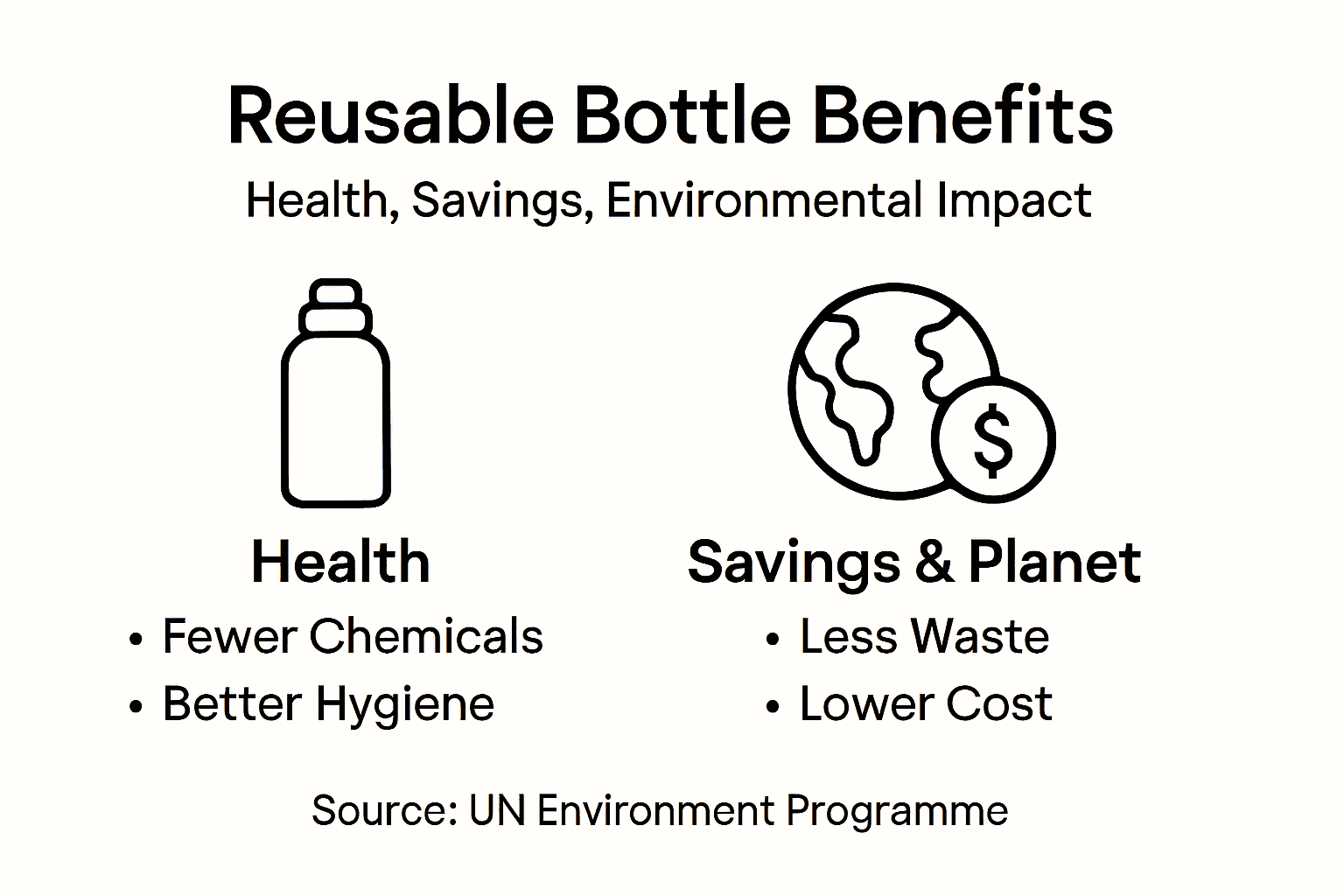
Reusable water bottles offer significant health advantages that extend far beyond simple hydration. Reducing chemical exposure through safer drinking vessels helps minimize potential long-term health risks associated with single-use plastics. By selecting materials like stainless steel or glass, health-conscious individuals can dramatically decrease their intake of harmful chemicals such as BPA and phthalates that commonly leach from disposable containers.
Regular hydration plays a crucial role in overall wellness, and reusable bottles support consistent water intake throughout daily activities. These bottles encourage more deliberate drinking habits by making water more accessible and appealing. Improved hydration contributes to enhanced cognitive function, better metabolic performance, increased energy levels, and more stable body temperature regulation. The psychological benefit of having a dedicated personal water container can also motivate individuals to drink water more frequently.
Beyond personal health, choosing reusable bottles represents a holistic wellness approach that interconnects individual and environmental health. By reducing plastic waste and minimizing microplastic exposure, users contribute to broader ecological wellness. Modern reusable bottles are designed with advanced features like volume markers, insulation technology, and ergonomic shapes that make hydration more convenient and enjoyable, supporting a proactive approach to personal health maintenance.
Pro tip: Clean your reusable bottle thoroughly with hot water and mild soap at least twice weekly, and allow it to air dry completely to maintain optimal hygiene and prevent bacterial growth.
Economic Impact: Cost Savings Over Time
Choosing reusable water bottles represents a smart financial strategy that delivers substantial economic benefits over time. Reusable packaging models demonstrate significant cost reduction potential by minimizing repeated purchases of single-use containers. While the initial investment might seem higher, the long-term financial advantages quickly become apparent through reduced ongoing expenses and improved resource management.
Economic analyses of reuse systems reveal complex financial dynamics that favor sustainable solutions. A typical consumer might spend between $500 to $1,000 annually on bottled water, whereas a high-quality reusable bottle costing $20-$50 can serve effectively for several years. The cumulative savings extend beyond direct purchase costs, encompassing reduced waste management expenses, lower environmental cleanup expenditures, and decreased healthcare costs associated with potential chemical exposures from disposable plastics.
The economic impact of reusable bottles transcends individual consumer savings, contributing to broader systemic cost reductions. Municipalities and businesses benefit from decreased waste processing infrastructure requirements, while environmental preservation efforts receive indirect financial support. Advanced reusable bottle designs now incorporate durability features that further enhance their economic value, making them increasingly attractive from both personal and societal financial perspectives.
Pro tip: Calculate your potential annual savings by tracking your current bottled water expenses and comparing them against a one-time reusable bottle investment to visualize your direct financial benefits.
To better understand the overall benefits, here’s how reusable bottles positively affect health, environment, and finances:
| Benefit Area | Personal Gains | Societal Impact | Long-Term Value |
|---|---|---|---|
| Health | Fewer harmful chemicals | Lower healthcare costs | Improved wellness |
| Environment | Less plastic waste | Cleaner ecosystems | Resource conservation |
| Financial | Significant yearly savings | Reduced waste management | Smart investment |
Environmental Effects and Reducing Plastic Waste
Reusable water bottles play a critical role in environmental conservation by dramatically reducing the massive plastic waste generated through single-use containers. A single reusable bottle can prevent hundreds of disposable plastic bottles from entering landfills and marine ecosystems annually. The environmental impact extends beyond waste reduction, encompassing significant energy savings and decreased greenhouse gas emissions associated with plastic production and transportation.
The United Nations Environment Programme highlights the systemic importance of transitioning to reusable alternatives. Life cycle assessments demonstrate substantial environmental benefits when consumers consistently use durable bottles. Each reuse cycle represents a meaningful reduction in raw material extraction, plastic manufacturing, and waste processing. Moreover, this approach directly supports circular economy principles by minimizing resource consumption and promoting more sustainable consumption patterns.
Beyond waste reduction, reusable bottles contribute to broader ecological protection efforts. They help mitigate microplastic pollution, protect marine wildlife, and reduce the environmental degradation caused by plastic waste. The cumulative impact of individual choices can drive significant systemic change, transforming consumer behavior from a linear consumption model to a more regenerative and environmentally responsible approach.
Pro tip: Track your personal plastic bottle reduction by marking each refill on your reusable bottle, creating a visual reminder of your positive environmental impact.
How to Switch: Common Mistakes and Success Tips
Consumer perspectives on reusable packaging reveal critical transition challenges, demonstrating that intention alone doesn’t guarantee successful adoption. The most common mistakes include underestimating the importance of convenience, overlooking proper cleaning techniques, and failing to establish a consistent bottle usage routine. Successful transitions require a strategic approach that addresses practical barriers and builds sustainable habits.
Cultural and personal attitudes significantly influence reusable bottle adoption. Consumer desirability depends on maintaining functionality and convenience comparable to single-use alternatives. Effective strategies involve selecting bottles that match individual lifestyle needs, investing in high-quality materials, and creating personal systems that make reusable bottle use effortless. This might include keeping multiple bottles in different locations, choosing designs that fit existing bags and drink holders, and developing consistent cleaning routines.
Educational awareness plays a crucial role in overcoming adoption barriers. Understanding the tangible environmental and personal health benefits can motivate long-term behavior change. Practical steps include gradually replacing single-use bottles, experimenting with different bottle types, and tracking personal waste reduction. Many successful adopters start by using reusable bottles in specific contexts like work or gym, then expanding their usage across different life areas.
Pro tip: Start by designating one week where you consciously track and replace every single-use plastic bottle with your reusable alternative, creating a personal baseline for your sustainability journey.
Make the Healthy Switch to Reusable Bottles and Save the Planet Today
Choosing reusable bottles tackles key challenges discussed in the article such as reducing chemical exposure, saving money, and protecting the environment. Many people struggle with finding a durable, safe, and convenient bottle that fits their lifestyle while supporting better hydration and sustainability goals. At Myequa, we understand these pain points and offer a diverse selection of high-quality bottles crafted from stainless steel, BPA-free plastic, and glass to meet your health and wellness needs.
Discover exclusive offers during our Black Friday event and explore stylish, safe options like our BPA free bottle with graphics by EQUA for both everyday use and gifting.
Take the next step toward improved wellness and environmental impact by exploring our carefully curated collection at Myequa.com. Start your sustainable hydration journey now to enjoy healthier daily habits, meaningful savings, and an active role in protecting the planet.
Frequently Asked Questions
What are the benefits of using reusable bottles?
Reusable bottles provide health benefits by reducing exposure to harmful chemicals found in single-use plastics, save money over time by eliminating the need for repeated purchases of bottled water, and significantly reduce plastic waste, benefiting the environment.
How do I maintain hygiene with a reusable bottle?
To maintain hygiene, clean your reusable bottle thoroughly with hot water and mild soap at least twice a week, and allow it to air dry completely to prevent bacterial growth.
What materials are best for reusable bottles?
The best materials for reusable bottles include stainless steel, which is highly durable and resistant to bacteria; glass, which offers pure taste without chemical interactions; and BPA-free plastics, which are budget-friendly with improved safety standards.
How can I encourage the use of reusable bottles in my daily life?
To encourage usage, keep multiple reusable bottles in various locations (home, work, gym), choose designs that fit your lifestyle needs, and establish a regular cleaning routine to make it a seamless part of your daily habits.
Recommended
- What Is a Reusable Bottle and Why It Matters – EQUA - Sustainable Water Bottles
- 7 Key Advantages of BPA-Free Bottles for Wellness Seekers – EQUA - Sustainable Water Bottles
- Best 6 bpa-free bottles review – Expert Comparison 2026 – EQUA - Sustainable Water Bottles
- Why Choose BPA-Free Bottles for Health – EQUA - Sustainable Water Bottles
Zdieľať
https://www.facebook.com/BoostronMaleEnhancement2026
https://www.facebook.com/groups/boostronmaleenhancementusa2026
https://www.facebook.com/groups/boostronmaleenhancementusafree
https://www.facebook.com/events/2027551941424745/
https://www.facebook.com/events/1218681913544373/
https://scribehow.com/viewer/Boostron_Male_Enhancement_Enhance_Sexual_Health_and_Vitality_with_Proven_Ingredients__XEBU0gD5TMmmSLNVIm1L4w
https://scribehow.com/viewer/Boostron_Male_Enhancement__Unlock_Your_Full_Potential_with_Natural_Support__g6ZJGLezQuu-zcrQOt_uxw
https://scribehow.com/viewer/Boostron_Male_Enhancement__Key_Ingredients_and_Benefits_for_Optimal_Male_Health__dkCYgek7RTahXH5B4SpSMg
https://boostronmaleenhancement2026.zohodesk.com/portal/en/kb/articles/boostron-male-enhancement-enhance-sexual-health-and-vitality-with-proven-ingredients
https://boostronmaleenhancement2026.zohodesk.com/portal/en/kb/articles/boostron-male-enhancement-unlock-your-full-potential-with-natural-support
https://boostronmaleenhancement2026.zohodesk.com/portal/en/kb/articles/boostron-male-enhancement-key-ingredients-and-benefits-for-optimal-male-health
https://ollama.com/Boostron/Boostron
https://www.facebook.com/PrimeTrtMaleEnhancement.2026
https://www.facebook.com/groups/primetrtmaleenhancement
https://www.facebook.com/groups/primetrtmaleenhancement.us
https://www.facebook.com/groups/primetrtmaleenhancement.2026
https://www.facebook.com/events/877386208325575/
https://www.facebook.com/events/2002412200671813/
https://www.facebook.com/events/1435308251538478/
https://scribehow.com/viewer/Prime_Trt_Male_Enhancement_Reviews_Worth_Buying_or_Fake_Scam__RgUznmnnTGSceXDj2eKAsg
https://scribehow.com/viewer/Prime_Trt_Male_Enhancement__Can_It_Really_Improve_Your_Confidence__BTo8P_oySfKpD9mkFqVcag
https://scribehow.com/viewer/Prime_Trt_Male_Enhancement__Happy_Sex_Life__Is_It_Worth_the_Buzz__hEVqtLmrRdetkIIQ4UZsEg
https://scribehow.com/viewer/Prime_Trt_Male_Enhancement_Review_Is_It_Really_Worth_The_Hype__3w0EHuEVRuerWziXJExfSQ
https://ollama.com/Prime-Trt/Prime-Trt
https://primetrtmaleenhancement.zohodesk.com/portal/en/kb/articles/prime-trt-male-enhancement-review-is-it-really-worth-the-hype
https://primetrtmaleenhancement.zohodesk.com/portal/en/kb/articles/prime-trt-male-enhancement-happy-sex-life-is-it-worth-the-buzz
https://primetrtmaleenhancement.zohodesk.com/portal/en/kb/articles/prime-trt-male-enhancement-can-it-really-improve-your-confidence
https://primetrtmaleenhancement.zohodesk.com/portal/en/kb/articles/prime-trt-male-enhancement-reviews-worth-buying-or-fake-scam
https://startupcentrum.com/tech-center/prime-trt-male-enhancement-can-it-really-improve-your-confidence
https://startupcentrum.com/tech-center/prime-trt-male-enhancement-review-is-it-really-worth-the-hype
https://startupcentrum.com/tech-center/prime-trt-male-enhancement-is-it-safe-read-experts-opinion
https://primetrtmaleenhancement.alboompro.com/prime-trt-male-enhancement
https://cascadespringsnature.org/forum/topic/prime-trt-male-enhancement-reviews-cost-scam-exposed/
https://cascadespringsnature.org/forum/topic/prime-trt-male-enhancement-is-it-safe-read-experts-opinion/
https://wanderlog.com/view/kwspdskftc/prime-trt-male-enhancement—can-it-really-improve-your-confidence/shared
https://wanderlog.com/view/ieppirohkp/prime-trt-male-enhancement-happy-sex-life—is-it-worth-the-buzz/shared
https://www.grepmed.com/PrimeTrtMaleEnhancement
https://comunidad.espoesia.com/primetrtmaleenhancement/prime-trt-male-enhancement-reviews-does-it-work-or-not/
https://comunidad.espoesia.com/primetrtmaleenhancement/prime-trt-male-enhancement-official-is-it-worth-the-hype/
https://comunidad.espoesia.com/primetrtmaleenhancement/prime-trt-male-enhancement-review-is-it-really-worth-the-hype/
https://comunidad.espoesia.com/primetrtmaleenhancement/prime-trt-male-enhancement-expert-review-is-it-worth-your-money/
https://5ghub.us/forums/topic/prime-trt-male-enhancement-official-website/
https://www.facebook.com/SupremeMaleAlphaGummies.us
https://www.facebook.com/groups/suprememalealphagummies.us
https://www.facebook.com/groups/suprememalealphagummies
https://www.facebook.com/events/1642611646754523/
https://www.facebook.com/events/1875140126701434/
https://scribehow.com/viewer/Supreme_Male_Alpha_Gummies_Is_It_Safe_Read_Experts_Opinion__mWMUYTQNTIWTmfxq6TxH7w
https://scribehow.com/viewer/Supreme_Male_Alpha_Gummies_Officia__Is_It_Worth_the_Hype__lcDBUlaLSc2KkXLK7cIEOQ
https://scribehow.com/viewer/Supreme_Male_Alpha_Gummies_Review_Is_It_Really_Worth_The_Hype__HIXWAZjuSOuKv4ZQiK3YUg
https://scribehow.com/viewer/Supreme_Male_Alpha_Gummies__Can_It_Really_Improve_Your_Confidence__2nxSxAAjSmOV-cNt2vVStw
https://supremealphagummies.zohodesk.com/portal/en/kb/articles/supreme-male-alpha-gummies-officia-is-it-worth-the-hype
https://supremealphagummies.zohodesk.com/portal/en/kb/articles/supreme-male-alpha-gummies-review-is-it-really-worth-the-hype
https://supremealphagummies.zohodesk.com/portal/en/kb/articles/supreme-male-alpha-gummies-is-it-safe-read-experts-opinion
https://supremealphagummies.zohodesk.com/portal/en/kb/articles/supreme-male-alpha-gummies-can-it-really-improve-your-confidence
https://ollama.com/SupremeMaleAlphaGummies/SupremeMaleAlphaGummies
https://startupcentrum.com/tech-center/supreme-male-alpha-gummies-can-it-really-improve-your-confidence
https://startupcentrum.com/tech-center/supreme-male-alpha-gummies-reviews-cost-scam-exposed
https://startupcentrum.com/tech-center/supreme-male-alpha-gummies-expert-review-is-it-worth-your-money
https://wanderlog.com/view/hsbnztnvhk/supreme-male-alpha-gummies—why-men-are-choosing/
https://wanderlog.com/view/ztntyfncsq/supreme-male-alpha-gummies-review-is-it-really-worth-the-hype/
https://wanderlog.com/view/vyzpenbksz/supreme-male-alpha-gummies—my-honest-opinion-and-results/
https://5ghub.us/forums/topic/supreme-male-alpha-gummies-reviews-cost-scam-exposed/
https://cascadespringsnature.org/forum/topic/supreme-male-alpha-gummies-can-it-really-improve-your-confidence/
https://cascadespringsnature.org/forum/topic/supreme-male-alpha-gummies-reviews-cost-scam-exposed/
https://www.facebook.com/VitalBoostXl
https://www.facebook.com/events/2407127466370171/
https://www.facebook.com/events/1311089027374003/
https://www.facebook.com/events/1613047946361301/
https://www.facebook.com/groups/vitalboostxl
https://www.facebook.com/groups/vital.boost.xl.2026
https://www.facebook.com/groups/vital.boost.xl.us
https://scribehow.com/viewer/Vital_Boost_Xl_Reviews__Is_It_Worth_Buying_User_Opinion__YQ8gdeAFSe2MbJfv2PrJgA
https://scribehow.com/viewer/Vital_Boost_Xl_Buy_Now_and_Boost_Strength_Stamina_and_Confidence__8krk1egrTRyz6KjltFNuFw
https://scribehow.com/viewer/Vital_Boost_Xl__Can_It_Really_Improve_Your_Confidence__0QYyQho7QJ-NuxZMuLz1sQ
https://scribehow.com/viewer/Vital_Boost_XL_Why_Men_Are_Choosing__BnAnlvP2Rh-SFkOPpzE9tw
https://vitalboostxl.zohodesk.com/portal/en/kb/articles/vital-boost-xl-why-men-are-choosing
https://vitalboostxl.zohodesk.com/portal/en/kb/articles/vital-boost-xl-reviews-my-in-depth-analysis-of-this
https://vitalboostxl.zohodesk.com/portal/en/kb/articles/vital-boost-xl-reviews-is-it-really-worth-trying
https://vitalboostxl.zohodesk.com/portal/en/kb/articles/vital-boost-xl-reviews-is-it-worth-buying-user-opinion
https://ollama.com/VitalBoostXl/VitalBoostXl
