


How to Pick Eco-Friendly Bottles for Sustainable Living
Studies show that a single American can use over 160 plastic bottles per year, raising urgent concerns about sustainability. For European city dwellers devoted to wellness and eco-friendly choices, finding hydration solutions that combine style and responsibility feels more important than ever. Discover how you can select the perfect reusable bottle, balance design with practicality, and reduce your environmental impact while enjoying exclusive Black Friday deals.
Table of Contents
- Step 1: Assess Your Hydration Needs
- Step 2: Research Sustainable Bottle Materials
- Step 3: Check Certifications And Safety Labels
- Step 4: Compare Design And Practical Features
- Step 5: Verify Eco Impact For Final Choice
Quick Summary
| Main Insight | Explanation |
|---|---|
| 1. Assess your hydration needs | Track your water intake and adjust based on activity level, climate, and overall health. |
| 2. Research sustainable materials | Investigate materials like stainless steel, glass, and biodegradable plastics for eco-friendly choices. |
| 3. Verify eco certifications | Look for labels like EU Ecolabel and resin ID codes to confirm sustainability claims. |
| 4. Evaluate design practicality | Choose bottles with features like ergonomic shapes and leak-proof caps that fit your lifestyle. |
| 5. Consider lifecycle impact | Analyze the full environmental footprint of bottles, from production to recycling potential. |
Step 1: Assess Your Hydration Needs
Understanding your personal hydration needs is the foundational step in choosing an eco-friendly water bottle that truly supports your wellness journey. Individual water requirements vary significantly based on factors like activity level, body weight, climate, and daily routine. Optimal hydration supports critical body functions such as temperature regulation and digestion.
To accurately assess your hydration needs, start by tracking your current water intake and understanding recommended guidelines. The National Academy of Medicine suggests daily fluid intake of approximately 13 cups for men and 9 cups for women. However, these are general recommendations, and your specific requirements might differ. Consider factors like physical activity, outdoor temperatures, your diet, and overall health status. Active individuals or those living in hot climates will naturally require more water compared to sedentary individuals in cooler environments.
A practical approach is monitoring your body’s signals. Pay attention to your thirst levels, urine color (pale yellow indicates good hydration), and energy levels throughout the day. Incorporate water-rich foods into your diet and aim for consistent hydration rather than sporadic large water consumption. Remember that water is the most efficient hydration source, helping aid heart function and waste removal.
Pro tip: Keep a small journal or use a smartphone app to track your daily water intake for a week, helping you understand your true hydration patterns and needs.
Step 2: Research Sustainable Bottle Materials
Researching sustainable bottle materials is crucial in making an environmentally responsible choice that aligns with your wellness goals. Sustainable design requires a comprehensive systems approach that considers environmental, social, and economic factors, making material selection more complex than simply picking the first eco-friendly option you encounter.
Today’s market offers several innovative sustainable material options for water bottles. Biodegradable bioplastics, recycled content plastics, and hybrid materials combining paper and plastic are emerging as promising alternatives to traditional petroleum-based plastics. Innovations in packaging materials are driven by low recycling rates and increasing environmental concerns, pushing manufacturers to develop more responsible solutions. When evaluating materials, consider factors like production energy, recyclability, durability, and potential for carbon footprint reduction.
Key materials to investigate include stainless steel, which offers exceptional durability and recyclability, glass with high recyclable properties, and advanced bioplastics made from plant-based sources. Reusable bottle materials that minimize environmental impact can significantly contribute to reducing single-use plastic waste while supporting your personal sustainability goals.
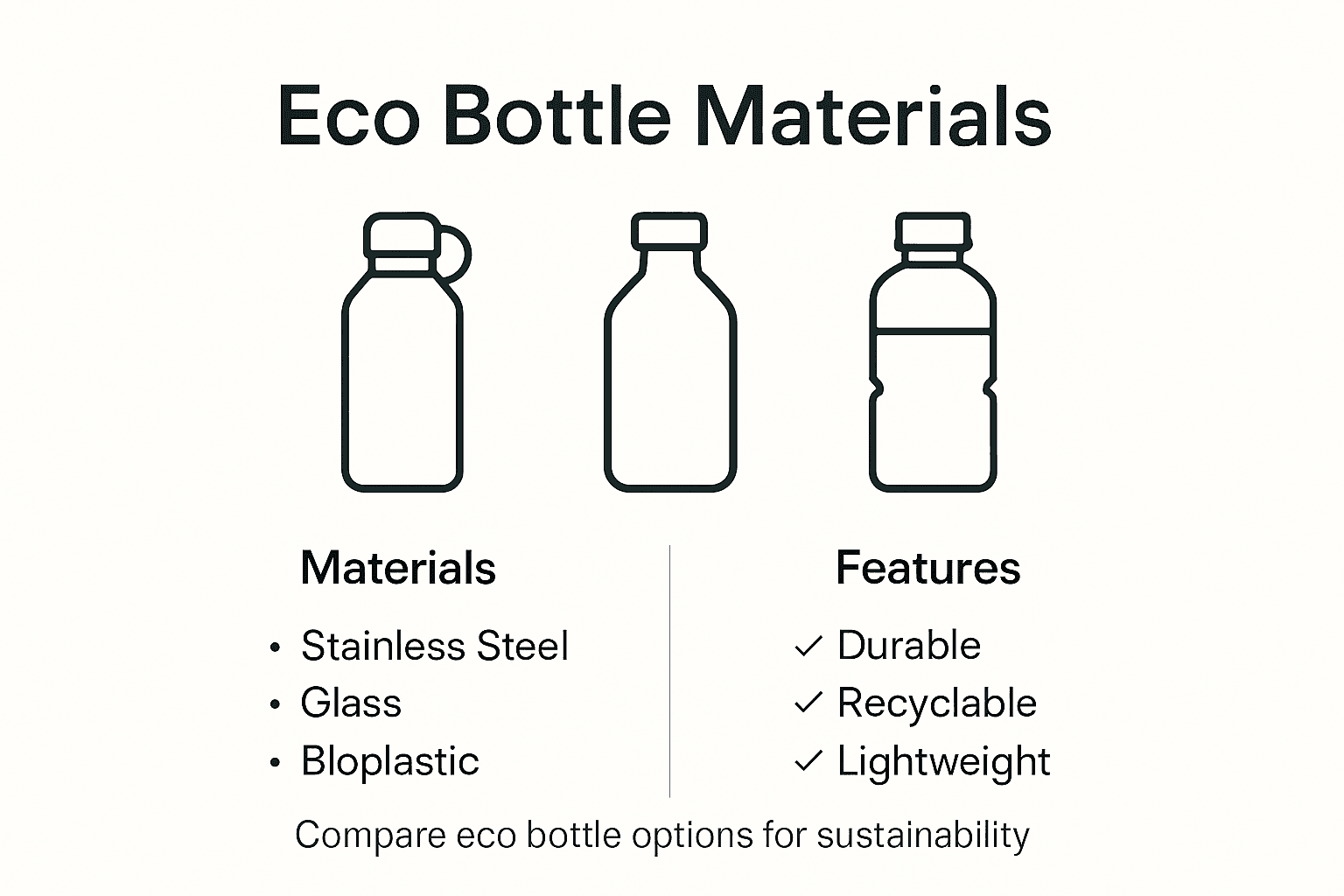
Here’s a concise comparison of popular sustainable water bottle materials and their eco-friendly attributes:
| Material Type | Eco Benefits | Durability | Recycling Potential |
|---|---|---|---|
| Stainless Steel | Highly recyclable, low toxins | Very high | Excellent |
| Glass | Chemical-free, fully recyclable | High | Excellent |
| Bioplastics | Plant-based, biodegradable | Moderate | Good (if facilities exist) |
| Recycled Plastics | Reduces waste, conserves resources | Moderate | Varies by type |
| Paper-Plastic Hybrids | Renewable sources, compostable options | Low to moderate | Limited (depends on blend) |
Pro tip: Research material lifecycle assessments and look for third-party sustainability certifications to gain deeper insights into a bottle’s true environmental impact.
Step 3: Check Certifications and Safety Labels
Navigating the world of eco-friendly bottle certifications requires a keen eye and understanding of what different labels truly represent. The EU Ecolabel serves as a voluntary certification scheme that helps consumers identify products meeting rigorous environmental performance criteria, providing a reliable indicator of sustainable manufacturing practices.
To verify authentic eco-friendly bottle claims, look for specific markers like resin identification codes, clear recycled material percentages, and reputable third-party certifications. Understanding the nuanced differences between post-consumer recycled content, post-industrial content, and bio-based materials will help you make more informed decisions. Pay special attention to certifications that detail the exact percentage of recycled or renewable materials, as this transparency demonstrates a manufacturer’s commitment to sustainability.
Compare key eco-friendly certifications and labeling terms for reusable bottles:
| Certification/Label | Indicates | What to Look For |
|---|---|---|
| EU Ecolabel | Rigorous environmental standards | Clear ecolabel logo, documentation |
| Resin ID Codes | Material identification | Correct code and recycling info |
| Recycled Content % | Amount of recycled material | Transparent sourcing details |
| BPA-Free | Absence of Bisphenol A | Clearly stated on packaging |
| Third-Party Verified | Independent assessment | Audit reports, certification body |
Why choose bottles with documented safety and sustainability credentials can significantly impact your environmental footprint. Prioritize bottles with mono-material construction, simple closures, and clear documentation about their material sourcing. These features not only improve recyclability but also reduce potential environmental contamination.
Pro tip: Cross-reference certification claims with manufacturer supply chain documentation to ensure the most accurate understanding of a bottle’s true environmental impact.
Step 4: Compare Design and Practical Features
Eco-design of packaging requires thoughtful integration of environmental and functional considerations, transforming water bottles from simple containers into strategic sustainability tools. Understanding the nuanced balance between design aesthetics and practical utility is crucial for making an informed choice that aligns with your wellness and environmental goals.

Consumer research reveals that sustainable packaging design significantly influences purchasing decisions, with key features including recyclable materials, minimalist aesthetics, and user-friendly functionality. When comparing bottle designs, evaluate critical aspects such as leak-proof caps, ergonomic shapes, weight distribution, and ease of cleaning. Consider how the bottle’s design supports your lifestyle whether you are commuting, hiking, working out, or traveling.
Prioritizing bottles with thoughtful design and safety credentials means looking beyond surface aesthetics. Examine the closure mechanism, handle comfort, size compatibility with standard cup holders, and potential insulation properties. A truly sustainable bottle should not just look good but integrate seamlessly into your daily routine while minimizing environmental impact.
Pro tip: Test potential bottles by physically handling them in stores or requesting detailed product specifications to ensure the design genuinely meets your practical and sustainability requirements.
Step 5: Verify Eco Impact for Final Choice
Life cycle assessment provides critical insights into the true environmental footprint of water bottles, revealing substantial differences between manufacturing approaches. Understanding the comprehensive ecological implications of your bottle choice goes beyond surface level sustainability claims and requires a deeper analysis of production, usage, and end-of-life potential.
National sustainability strategies increasingly emphasize comprehensive resource efficiency and product lifecycle considerations, which means verifying eco impact involves more than just checking a few green certifications. Examine the bottle’s entire journey from raw material extraction to potential recycling. Look for transparent data about carbon emissions during production, the percentage of recycled materials used, potential for future recycling, and the manufacturer’s commitment to reducing environmental impact.
Investigating a bottle’s sustainability credentials requires comparing its performance across multiple environmental metrics. Research shows that recycled PET bottles can reduce global warming potential by over 80%, making material sourcing a critical factor. Consider the bottle’s durability, potential for reuse, ease of repair, and ultimate recyclability when making your final selection.
Pro tip: Request detailed environmental impact reports from manufacturers and cross-reference their sustainability claims with independent third-party environmental assessments.
Choose the Perfect Eco-Friendly Bottle for Your Sustainable Lifestyle
Making the right choice in an eco-friendly water bottle is a meaningful step toward better health and a cleaner planet. This article highlights key challenges like assessing hydration needs, researching sustainable materials, and verifying certifications. You want a bottle that fits your routine, reduces environmental impact, and is made with transparent, trustworthy materials.
Discover bottles that combine durability, safety, and stylish design while prioritizing sustainability. At Myequa.com, find a curated selection of reusable glass water bottles made in EU that meet high environmental standards. Explore our MYEQUA Reusable glass water bottles | made in EU | hydration solution collection for bottles designed with your wellness and the planet in mind.
Take advantage of our exclusive Black Friday deals with discounts up to 70 percent. Start your journey to mindful hydration and sustainable living now. Visit Myequa.com and select your ideal eco-friendly bottle today.
Frequently Asked Questions
How do I assess my hydration needs when choosing an eco-friendly bottle?
To assess your hydration needs, track your current water intake and consider factors like your activity level, climate, and overall health. Aim to drink around 13 cups for men and 9 cups for women daily, adjusting for personal factors. Keep a journal or use an app to record your intake and understand your hydration patterns.
What sustainable materials should I look for in an eco-friendly water bottle?
Look for materials like stainless steel, glass, and bioplastics made from plant sources when choosing a sustainable bottle. Evaluate each material’s durability and recycling potential, with stainless steel and glass being highly recyclable options. Research the life cycle of the materials to ensure they align with your sustainability goals.
How can I identify trustworthy certifications on eco-friendly bottles?
To identify trustworthy certifications, check for labels like the EU Ecolabel and look for clear documentation on recycled content. Verify that the bottle includes resin identification codes and third-party certifications that detail the percentage of recycled or renewable materials. Make sure the claims are transparent and consistent with the manufacturer’s sourcing practices.
What design features are important for an eco-friendly water bottle?
Important design features include leak-proof caps, ergonomic shapes, and ease of cleaning. Evaluate how the bottle’s design fits into your daily activities, whether for commuting, exercising, or traveling. Aim for bottles that provide both functionality and sustainability without compromising on style.
How can I verify the eco impact of a water bottle before purchasing?
You can verify the eco impact by researching the bottle’s full life cycle, including production energy and recycling potential. Request environmental impact reports from manufacturers and compare them with third-party assessments. Focus on details like carbon emissions and materials used to ensure your choice aligns with sustainability efforts.
What steps can I take to ensure my eco-friendly bottle is truly sustainable?
To ensure your bottle is sustainable, examine its materials, certifications, and design features. Conduct thorough research on the manufacturer’s practices and request documentation about the bottle’s environmental impact. This comprehensive approach will help you make a well-informed choice that contributes to sustainable living.
Recommended
- What Is a Reusable Bottle and Why It Matters – EQUA - Sustainable Water Bottles
- 7 Key Advantages of BPA-Free Bottles for Wellness Seekers – EQUA - Sustainable Water Bottles
- Best 6 bpa-free bottles review – Expert Comparison 2026 – EQUA - Sustainable Water Bottles
- Why Choose BPA-Free Bottles for Health – EQUA - Sustainable Water Bottles
https://garaherbformenusa.lovable.app
https://www.facebook.com/GaraherbForMenUs
https://www.facebook.com/groups/garaherbformenusa
https://www.facebook.com/events/2711316202579517/
https://www.facebook.com/groups/garaherbformen.us
https://www.facebook.com/events/1192158966454849/
https://garaherbformen.alboompro.com/garaherbformen
https://garaherbformen.zohodesk.com/portal/en/kb/articles/garaherb-for-men-review-uncovering-reviews-benefits-analysis-49
https://garaherbformen.zohodesk.com/portal/en/kb/articles/garaherb-for-men-we-tried-it-55-day-s-beware-buyer-avoid-customer-risks
https://garaherbformen.zohodesk.com/portal/en/kb/articles/garaherb-for-men-reviews-jan-2026-critical-customer-warning-exposed-ingredients-49
https://garaherbformen.zohodesk.com/portal/en/kb/articles/garaherb-for-men-reviews-we-tested-it-for-90-days-the-real-science-behind
https://wanderlog.com/view/ncjvdtwyki/garaherb-for-men-review-uncovering-reviews-benefits-analysis49/shared
https://wanderlog.com/view/chlxefafzf/garaherb-for-men-we-tried-it-55-days-beware-buyer-avoid-customer-risks/shared
https://startupcentrum.com/tech-center/garaherb-for-men-review-uncovering-reviews-benefits-analysis-49
https://startupcentrum.com/tech-center/garaherb-for-men-official-is-it-worth-the-hype
https://startupcentrum.com/tech-center/garaherb-for-men-we-tried-it-55-day-s-beware-buyer-avoid-customer-risks
https://scribehow.com/viewer/Garaherb_For_Mentm_Review_Uncovering_Reviews_Benefits_Analysisdollar49__6SgZ1Tf6Sbmz6UTf0u7Zwg
https://scribehow.com/viewer/Garaherb_For_Mentm_We_Tried_It_55_days_Beware_Buyer_Avoid_Customer_Risks__L3Ukb2iQSr2q0LdYUph3kg
https://www.facebook.com/ApexForceMaleEnhancement2025/
https://www.facebook.com/groups/apexforcemaleenhancementusofficial
https://www.facebook.com/groups/apexforcemaleenhancementshop.new
https://www.facebook.com/events/1091461319508773/
https://www.facebook.com/events/1446320353101525
https://eventprime.co/o/ApexForceMaleEnhancement
https://eventprime.co/o/ApexForceMaleEnhancementUSA
https://apexforcemaleenhancementusa.zohodesk.com/portal/en/kb/articles/apex-force-male-enhancement-is-it-worth-the-hype
https://apexforcemaleenhancementusa.zohodesk.com/portal/en/kb/articles/apex-force-male-enhancement-list-of-top-sex-pills-to-increase-sex-drive
https://apexforcemaleenhancementusa.zohodesk.com/portal/en/kb/articles/apex-force-male-enhancement-review-is-it-really-worth-the-hype
https://apexforcemaleenhancementusa.zohodesk.com/portal/en/kb/articles/apex-force-male-enhancement-for-sexual-health
https://apexforcemale3.alboompro.com/post/apex-force-male-enhancement-review-is-it-really-worth-the-hype
https://apexforcemale3.alboompro.com/post/apex-force-male-enhancement-for-sexual-health
https://apexforcemale3.alboompro.com/post/apex-force-male-enhancement-review-is-it-really-worth-the-hype
https://slonec.com/candidate/apexforcemaleenhancementusa/
https://www.facebook.com/TestoDarkMaleEnhancement
https://www.facebook.com/groups/testodarkmaleenhancement
https://www.facebook.com/events/1200065902340188
https://www.facebook.com/groups/testodarkmaleenhancement.usa
https://www.facebook.com/events/3374915289316485
https://testodarkhealth.zohodesk.com/portal/en/kb/articles/testo-dark-male-enhancement-where-to-buy-is-it-worth-buying
https://testodarkhealth.zohodesk.com/portal/en/kb/articles/testo-dark-male-enhancement-we-tried-it-55-day-s-beware-buyer-avoid-customer-risks
https://testodarkhealth.zohodesk.com/portal/en/kb/articles/testo-dark-male-enhancement-reviews-we-tested-it-for-90-days-the-real-science-behind
https://testodarkhealth.zohodesk.com/portal/en/kb/articles/testo-dark-male-enhancement-review-uncovering-reviews-benefits-analysis-49
https://scribehow.com/viewer/Testo_Dark_Male_Enhancementtm_Review_Uncovering_Reviews_Benefits_Analysisdollar49__fJVZBiGlSiCXPzwfYvx_Vg
https://startupcentrum.com/tech-center/testo-dark-male-enhancement-where-to-buy-is-it-worth-buying
https://startupcentrum.com/tech-center/testo-dark-male-enhancement-we-tried-it-55-day-s-beware-buyer-avoid-customer-risks-testo-dark-male-enhancement-review-uncovering-reviews-benefits-analysis-49
https://startupcentrum.com/tech-center/testo-dark-male-enhancement-reviews-we-tested-it-for-90-days-the-real-science-behind
https://wanderlog.com/view/mpwvsrncwp/testo-dark-male-enhancement-review-uncovering-reviews-benefits-analysis49/shared
https://wanderlog.com/view/khrhytlkrb/testo-dark-male-enhancement-we-tried-it-55-days-beware-buyer-avoid-customer-risks/shared
https://www.facebook.com/BoostronMaleEnhancement2026
https://www.facebook.com/groups/boostronmaleenhancementusa2026
https://www.facebook.com/groups/boostronmaleenhancementusafree
https://www.facebook.com/events/2027551941424745/
https://www.facebook.com/events/1218681913544373/
https://scribehow.com/viewer/Boostron_Male_Enhancement_Enhance_Sexual_Health_and_Vitality_with_Proven_Ingredients__XEBU0gD5TMmmSLNVIm1L4w
https://scribehow.com/viewer/Boostron_Male_Enhancement__Unlock_Your_Full_Potential_with_Natural_Support__g6ZJGLezQuu-zcrQOt_uxw
https://scribehow.com/viewer/Boostron_Male_Enhancement__Key_Ingredients_and_Benefits_for_Optimal_Male_Health__dkCYgek7RTahXH5B4SpSMg
https://boostronmaleenhancement2026.zohodesk.com/portal/en/kb/articles/boostron-male-enhancement-enhance-sexual-health-and-vitality-with-proven-ingredients
https://boostronmaleenhancement2026.zohodesk.com/portal/en/kb/articles/boostron-male-enhancement-unlock-your-full-potential-with-natural-support
https://boostronmaleenhancement2026.zohodesk.com/portal/en/kb/articles/boostron-male-enhancement-key-ingredients-and-benefits-for-optimal-male-health
https://ollama.com/Boostron/Boostron
https://www.facebook.com/PrimeTrtMaleEnhancement.2026
https://www.facebook.com/groups/primetrtmaleenhancement
https://www.facebook.com/groups/primetrtmaleenhancement.us
https://www.facebook.com/groups/primetrtmaleenhancement.2026
https://www.facebook.com/events/877386208325575/
https://www.facebook.com/events/2002412200671813/
https://www.facebook.com/events/1435308251538478/
https://scribehow.com/viewer/Prime_Trt_Male_Enhancement_Reviews_Worth_Buying_or_Fake_Scam__RgUznmnnTGSceXDj2eKAsg
https://scribehow.com/viewer/Prime_Trt_Male_Enhancement__Can_It_Really_Improve_Your_Confidence__BTo8P_oySfKpD9mkFqVcag
https://scribehow.com/viewer/Prime_Trt_Male_Enhancement__Happy_Sex_Life__Is_It_Worth_the_Buzz__hEVqtLmrRdetkIIQ4UZsEg
https://scribehow.com/viewer/Prime_Trt_Male_Enhancement_Review_Is_It_Really_Worth_The_Hype__3w0EHuEVRuerWziXJExfSQ
https://ollama.com/Prime-Trt/Prime-Trt
https://primetrtmaleenhancement.zohodesk.com/portal/en/kb/articles/prime-trt-male-enhancement-review-is-it-really-worth-the-hype
https://primetrtmaleenhancement.zohodesk.com/portal/en/kb/articles/prime-trt-male-enhancement-happy-sex-life-is-it-worth-the-buzz
https://primetrtmaleenhancement.zohodesk.com/portal/en/kb/articles/prime-trt-male-enhancement-can-it-really-improve-your-confidence
https://primetrtmaleenhancement.zohodesk.com/portal/en/kb/articles/prime-trt-male-enhancement-reviews-worth-buying-or-fake-scam
https://startupcentrum.com/tech-center/prime-trt-male-enhancement-can-it-really-improve-your-confidence
https://startupcentrum.com/tech-center/prime-trt-male-enhancement-review-is-it-really-worth-the-hype
https://startupcentrum.com/tech-center/prime-trt-male-enhancement-is-it-safe-read-experts-opinion
https://primetrtmaleenhancement.alboompro.com/prime-trt-male-enhancement
https://cascadespringsnature.org/forum/topic/prime-trt-male-enhancement-reviews-cost-scam-exposed/
https://cascadespringsnature.org/forum/topic/prime-trt-male-enhancement-is-it-safe-read-experts-opinion/
https://wanderlog.com/view/kwspdskftc/prime-trt-male-enhancement—can-it-really-improve-your-confidence/shared
https://wanderlog.com/view/ieppirohkp/prime-trt-male-enhancement-happy-sex-life—is-it-worth-the-buzz/shared
https://www.grepmed.com/PrimeTrtMaleEnhancement
https://comunidad.espoesia.com/primetrtmaleenhancement/prime-trt-male-enhancement-reviews-does-it-work-or-not/
https://comunidad.espoesia.com/primetrtmaleenhancement/prime-trt-male-enhancement-official-is-it-worth-the-hype/
https://comunidad.espoesia.com/primetrtmaleenhancement/prime-trt-male-enhancement-review-is-it-really-worth-the-hype/
https://comunidad.espoesia.com/primetrtmaleenhancement/prime-trt-male-enhancement-expert-review-is-it-worth-your-money/
https://5ghub.us/forums/topic/prime-trt-male-enhancement-official-website/
https://www.facebook.com/SupremeMaleAlphaGummies.us
https://www.facebook.com/groups/suprememalealphagummies.us
https://www.facebook.com/groups/suprememalealphagummies
https://www.facebook.com/events/1642611646754523/
https://www.facebook.com/events/1875140126701434/
https://scribehow.com/viewer/Supreme_Male_Alpha_Gummies_Is_It_Safe_Read_Experts_Opinion__mWMUYTQNTIWTmfxq6TxH7w
https://scribehow.com/viewer/Supreme_Male_Alpha_Gummies_Officia__Is_It_Worth_the_Hype__lcDBUlaLSc2KkXLK7cIEOQ
https://scribehow.com/viewer/Supreme_Male_Alpha_Gummies_Review_Is_It_Really_Worth_The_Hype__HIXWAZjuSOuKv4ZQiK3YUg
https://scribehow.com/viewer/Supreme_Male_Alpha_Gummies__Can_It_Really_Improve_Your_Confidence__2nxSxAAjSmOV-cNt2vVStw
https://supremealphagummies.zohodesk.com/portal/en/kb/articles/supreme-male-alpha-gummies-officia-is-it-worth-the-hype
https://supremealphagummies.zohodesk.com/portal/en/kb/articles/supreme-male-alpha-gummies-review-is-it-really-worth-the-hype
https://supremealphagummies.zohodesk.com/portal/en/kb/articles/supreme-male-alpha-gummies-is-it-safe-read-experts-opinion
https://supremealphagummies.zohodesk.com/portal/en/kb/articles/supreme-male-alpha-gummies-can-it-really-improve-your-confidence
https://ollama.com/SupremeMaleAlphaGummies/SupremeMaleAlphaGummies
https://startupcentrum.com/tech-center/supreme-male-alpha-gummies-can-it-really-improve-your-confidence
https://startupcentrum.com/tech-center/supreme-male-alpha-gummies-reviews-cost-scam-exposed
https://startupcentrum.com/tech-center/supreme-male-alpha-gummies-expert-review-is-it-worth-your-money
https://wanderlog.com/view/hsbnztnvhk/supreme-male-alpha-gummies—why-men-are-choosing/
https://wanderlog.com/view/ztntyfncsq/supreme-male-alpha-gummies-review-is-it-really-worth-the-hype/
https://wanderlog.com/view/vyzpenbksz/supreme-male-alpha-gummies—my-honest-opinion-and-results/
https://5ghub.us/forums/topic/supreme-male-alpha-gummies-reviews-cost-scam-exposed/
https://cascadespringsnature.org/forum/topic/supreme-male-alpha-gummies-can-it-really-improve-your-confidence/
https://cascadespringsnature.org/forum/topic/supreme-male-alpha-gummies-reviews-cost-scam-exposed/
https://www.facebook.com/VitalBoostXl
https://www.facebook.com/events/2407127466370171/
https://www.facebook.com/events/1311089027374003/
https://www.facebook.com/events/1613047946361301/
https://www.facebook.com/groups/vitalboostxl
https://www.facebook.com/groups/vital.boost.xl.2026
https://www.facebook.com/groups/vital.boost.xl.us
https://scribehow.com/viewer/Vital_Boost_Xl_Reviews__Is_It_Worth_Buying_User_Opinion__YQ8gdeAFSe2MbJfv2PrJgA
https://scribehow.com/viewer/Vital_Boost_Xl_Buy_Now_and_Boost_Strength_Stamina_and_Confidence__8krk1egrTRyz6KjltFNuFw
https://scribehow.com/viewer/Vital_Boost_Xl__Can_It_Really_Improve_Your_Confidence__0QYyQho7QJ-NuxZMuLz1sQ
https://scribehow.com/viewer/Vital_Boost_XL_Why_Men_Are_Choosing__BnAnlvP2Rh-SFkOPpzE9tw
https://vitalboostxl.zohodesk.com/portal/en/kb/articles/vital-boost-xl-why-men-are-choosing
https://vitalboostxl.zohodesk.com/portal/en/kb/articles/vital-boost-xl-reviews-my-in-depth-analysis-of-this
https://vitalboostxl.zohodesk.com/portal/en/kb/articles/vital-boost-xl-reviews-is-it-really-worth-trying
https://vitalboostxl.zohodesk.com/portal/en/kb/articles/vital-boost-xl-reviews-is-it-worth-buying-user-opinion
https://ollama.com/VitalBoostXl/VitalBoostXl
