


Benefits of Glass Hydration Bottles for Wellness
Finding a truly healthy, eco-friendly hydration bottle can feel confusing when old myths about glass just will not fade. For European wellness seekers, the right choice balances purity, durability, and sustainable style. This guide reveals why modern glass hydration bottles deliver chemical-free hydration with practical strength, how design advancements defy outdated misconceptions, and how smart Black Friday shopping lets you prioritize wellness while saving on long-lasting, stylish bottles.
Table of Contents
- Defining Glass Hydration Bottles And Misconceptions
- Types And Features Of Glass Water Bottles
- How Glass Bottles Enhance Health And Safety
- Eco-Friendly Impact And Reusability Explained
- Comparing Glass To Plastic And Stainless Steel
- Practical Costs, Risks, And Care Requirements
Key Takeaways
| Point | Details |
|---|---|
| Durability Misconceptions | Modern glass hydration bottles, made with tempered glass, are durable and resistant to shattering, addressing common worries about fragility. |
| Health and Safety Benefits | Glass bottles maintain the purity of beverages without leaching harmful substances, making them safer than plastic options. |
| Sustainability | Glass is infinitely recyclable and reusable, significantly reducing environmental impact compared to single-use plastics. |
| Care Requirements | To ensure longevity, use protective sleeves, clean regularly, and avoid sudden temperature changes. |
Defining Glass Hydration Bottles And Misconceptions
A glass hydration bottle is a beverage container made primarily from glass, designed to hold water and other drinks while supporting your daily wellness routine. Unlike plastic alternatives, glass maintains the pure taste of your water without leaching chemicals or absorbing odors. These bottles serve as a sustainable, health-conscious choice for Europeans who value both personal wellness and environmental responsibility.
The most persistent myth about glass bottles centers on durability. Many assume they shatter at the slightest bump or drop, making them impractical for everyday use. However, modern glass hydration bottles utilize tempered glass technology, which is up to four times stronger than regular glass and designed to break into small, rounded pieces if damaged. This advancement transforms glass from fragile to genuinely reliable for commuting, gym sessions, and outdoor activities.
Another common misconception claims glass bottles are too heavy or bulky for portable hydration. Reality tells a different story. When you explore the benefits of borosilicate glass, you discover that this specialized material offers exceptional strength while remaining lightweight enough for daily carry. The sleek designs available today fit naturally into backpacks, bags, and cup holders.
Some people believe glass bottles offer no environmental advantage over other materials. This overlooks a crucial fact: glass is infinitely recyclable without degrading quality, making it genuinely sustainable across multiple lifecycles. Once you understand what truly matters for wellness, glass becomes the obvious choice.
The final misconception suggests glass bottles cannot keep beverages at desired temperatures. Modern designs incorporate double-wall insulation or protective sleeves that maintain both hot and cold drinks effectively, addressing this concern entirely.
Pro tip: When comparing glass bottles, look specifically for borosilicate glass bottles rather than standard glass, as this material offers superior thermal stability and durability without significant weight increase.
Types And Features Of Glass Water Bottles
Glass water bottles come in several distinct categories, each designed to meet different wellness needs and lifestyle preferences. The primary distinction lies in the glass material itself. Borosilicate glass represents the premium choice, offering superior thermal resistance and durability compared to standard glass. This specialized material withstands temperature fluctuations without cracking, making it ideal for switching between hot tea and cold water throughout your day.
Beyond glass type, bottles vary significantly in their protective features. Many designs include protective sleeves made from silicone, neoprene, or cork. These sleeves serve dual purposes: they insulate your beverage while also protecting the glass from impact during daily use. Some European buyers particularly favor cork sleeves for their aesthetic appeal and eco-friendly credentials.
The cap and sealing mechanism represents another crucial feature category. Leak-proof lids are now standard on quality glass bottles, preventing spills in your bag or gym locker. Beyond basic sealing, modern designs include various cap materials and closure systems that enhance both functionality and durability. Wide mouth openings make cleaning effortless and allow you to add ice cubes or fruit infusions without struggle.
Ergo-focused design features increasingly define contemporary glass bottles. Ergonomic shapes curve naturally into your hand, while textured grips prevent slipping even when wet. Bottle sizing ranges from compact 300ml options for quick hydration to 1-liter capacity bottles for full-day hydration tracking.
Portability features matter for active Europeans juggling commutes and fitness routines. Bottles designed with carrying loops or integrated handles fit seamlessly into backpacks, gym bags, and car cup holders. Some models feature compartments for storing wellness supplements or daily vitamins alongside your water.

Pro tip: Select a borosilicate glass bottle with a protective sleeve if you frequently travel or use it during exercise, as this combination maximizes durability while maintaining the purity benefits of glass.
How Glass Bottles Enhance Health And Safety
Glass bottles provide genuine health advantages that set them apart from plastic and metal alternatives. Their chemically inert nature means glass doesn’t react with the water or beverages stored inside. This prevents harmful substances from leaching into your drink, a concern with certain plastics that can release BPA, antimony, or other chemicals over time.
The purity factor extends to taste and hydration quality. Unlike plastic bottles that can impart unwanted flavors or compromise water’s natural properties, glass maintains the authentic taste of your beverages. When you drink from glass, you’re consuming your water exactly as intended, without chemical interference or flavor degradation.
Hygienic benefits come from glass’s non-porous surface structure. Unlike some materials that harbor bacteria in microscopic crevices, glass surfaces are smooth and easily cleanable. This design prevents bacterial growth and cross-contamination, meaning your daily hydration truly supports your wellness routine. Regular washing keeps glass bottles pristine.
The microplastics issue affecting many people has prompted health-conscious Europeans to reconsider their hydration choices. Glass bottles eliminate this concern entirely—they don’t shed microplastics during use. While some risks from plastic bottles include BPA exposure, glass sidesteps this problem completely, providing safer daily hydration.
Temperature stability matters for health too. Glass won’t leach chemicals when holding hot beverages, unlike certain plastics that release harmful compounds under heat. Your morning tea stays pure, and your cold water remains clean from morning to evening.
The cumulative effect supports your complete wellness journey. Consistent access to uncontaminated, chemically-safe hydration strengthens your body’s natural detoxification processes and supports optimal nutrient absorption.
Pro tip: Inspect glass bottle caps regularly, as some plastic cap materials may contain BPA—prioritize bottles with metal or BPA-free caps for maximum health protection.
Eco-Friendly Impact And Reusability Explained
Glass bottles represent a genuine environmental solution in a world drowning in single-use plastic waste. The reusability factor stands at the core of their eco-friendly advantage. A single glass bottle can replace hundreds of disposable plastic bottles over its lifetime, dramatically reducing your personal contribution to landfills and ocean pollution.
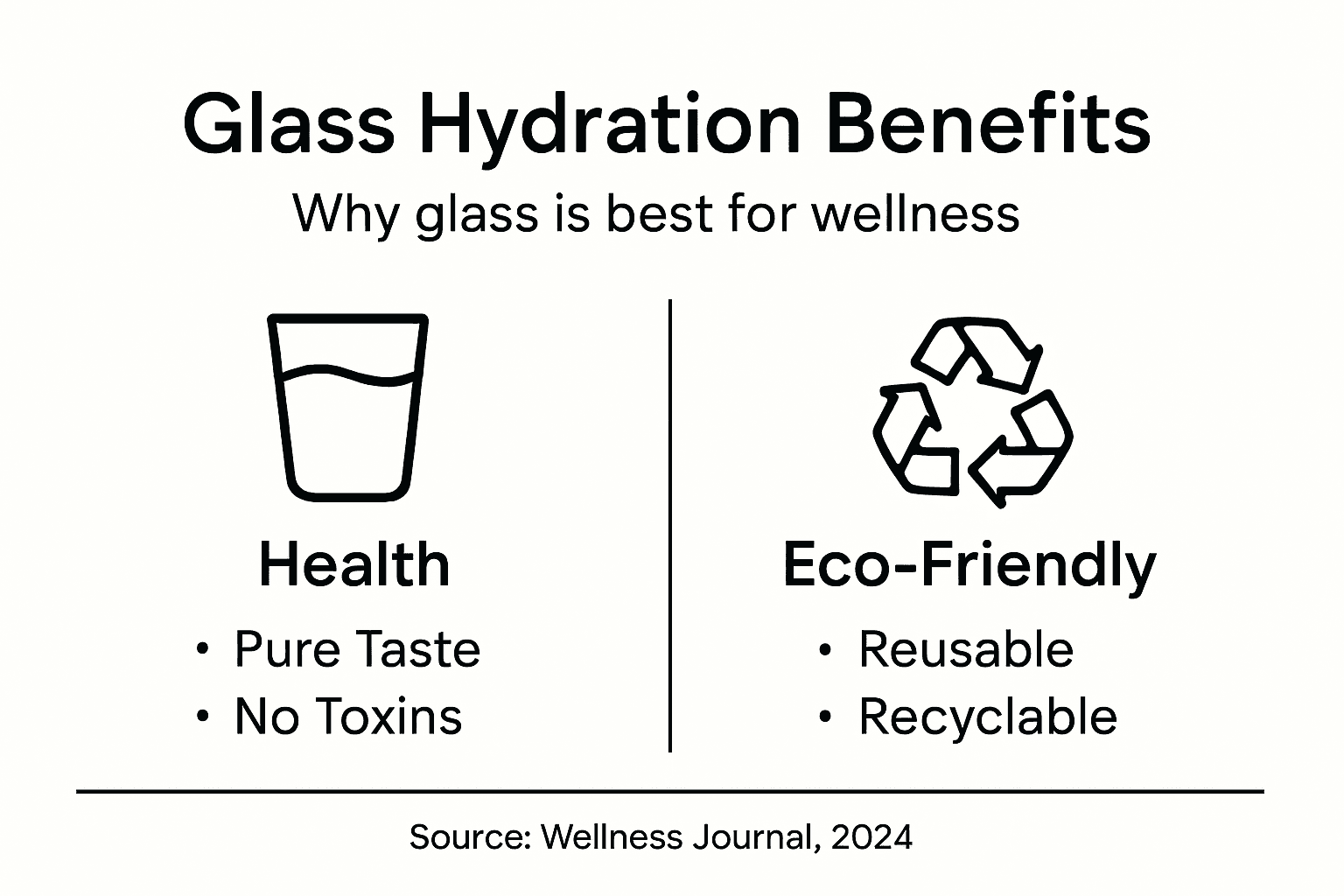
The recyclability of glass extends its environmental benefit indefinitely. Unlike plastic, which degrades after just a few recycling cycles and eventually becomes microplastic waste, glass maintains its integrity through endless cycles. When a glass bottle finally reaches the end of its usable life, it enters the recycling stream without losing quality or creating toxic byproducts. This circular lifecycle means glass truly supports sustainability in ways single-use alternatives cannot.
Production energy costs do initially exceed those of plastic manufacturing. However, this upfront environmental investment pays dividends over time. A glass bottle used consistently for several years offsets its production footprint many times over. By contrast, a plastic bottle used once creates permanent waste that persists for centuries. The sustainability benefits of reusable bottles become mathematically undeniable when you track lifetime usage across years of daily hydration.
For European consumers prioritizing sustainable living, glass bottles align perfectly with your values. They don’t degrade into harmful microplastics that contaminate soil and water systems. Your choice to use glass actively reduces plastic pollution rather than managing its consequences.
Proper maintenance extends longevity even further. A well-cared-for glass bottle lasts years, sometimes decades. This durability transforms your purchase into a long-term wellness investment rather than a temporary commodity.
The collective impact matters. When thousands of Europeans switch from disposable to glass reusable bottles, the reduction in plastic production, manufacturing emissions, and waste streams becomes substantial and measurable.
Pro tip: Store your glass bottle in a protective sleeve to extend its lifespan, and consider purchasing during Black Friday sales to maximize your financial savings while minimizing environmental impact through fewer replacement cycles.
Comparing Glass To Plastic And Stainless Steel
When selecting a hydration bottle, you’re really choosing between three main materials, each with distinct tradeoffs. Understanding these differences helps you align your purchase with your wellness priorities and lifestyle needs.
Plastic bottles offer affordability and lightweight portability. They’re inexpensive, widely available, and shatter-resistant. However, this convenience comes at a cost. Plastic bottles can leach chemicals like BPA into your water, especially when exposed to heat or sunlight. Over time, they also shed microplastics that enter your body with every sip. Environmentally, they create persistent waste that takes centuries to decompose.
Stainless steel bottles excel at temperature retention, keeping hot drinks warm and cold drinks cold for hours. They’re durable and don’t leach chemicals. The downside? Lower-quality stainless steel can impart metallic flavors that compromise taste. Some users find this off-putting for everyday hydration. Stainless steel also requires careful maintenance to prevent rust and maintain longevity.
Glass bottles occupy a unique position as the purest option. Comparing hydration materials reveals glass maintains neutral taste without chemical interference or metallic flavors. Glass is chemically inert, ensuring your water stays pure from first fill to last sip. It’s infinitely recyclable without quality degradation, supporting genuine sustainability.
The tradeoff with glass is relative fragility and higher initial production footprint. Yet when you use a glass bottle consistently over years, this environmental cost becomes negligible compared to replacing plastic bottles monthly.
For health-conscious Europeans prioritizing wellness and environmental responsibility, the choice becomes clear. Glass delivers what plastic cannot: safety without toxins. It provides what stainless steel struggles with: authentic taste preservation. Yes, glass requires more care, but the wellness benefits justify the attention.
Here’s a concise comparison of glass, plastic, and stainless steel hydration bottles:
| Attribute | Glass Bottles | Plastic Bottles | Stainless Steel Bottles |
|---|---|---|---|
| Taste Preservation | Pure, neutral taste | Can leach flavors and odors | May add metallic taste |
| Chemical Safety | Chemically inert, BPA-free | Risk of leaching chemicals | No leaching if quality-made |
| Recyclability | Infinitely recyclable | Limited recycling cycles | Recyclable, but energy-heavy |
| Weight | Moderate, varies by design | Very light | Heavier than plastic |
| Temperature Retention | Moderate (with insulation) | Poor without added layer | Excellent, keeps drinks hot/cold |
| Environmental Impact | Low with long-term use | High, persistent microplastics | Moderate, production intensive |
| Durability | Fragile without protection | Durable, shatter-resistant | Very durable, prone to dents |
| Typical Upfront Cost | €25–€50 | €5–€10 | €20–€40 |
Pro tip: If durability concerns you most, select borosilicate glass bottles with protective silicone sleeves—this combination offers glass purity with enhanced impact resistance comparable to stainless steel.
Practical Costs, Risks, And Care Requirements
Glass bottles demand a realistic look at upfront investment versus long-term savings. A quality glass bottle typically costs between 25 to 50 euros, compared to 5 to 10 euros for plastic alternatives. This initial price difference feels significant. However, the math changes dramatically when you consider durability. A glass bottle lasts years or even decades with proper care, while plastic bottles need replacement every few months. Over five years, you’ll spend substantially more on replacing plastic bottles than purchasing a single glass option upfront.
The primary risk with glass is breakage. A dropped bottle can shatter, leaving you without your hydration tool and potentially creating cleanup hazards. This risk diminishes considerably with proper precautions. Protective sleeves made from silicone or neoprene absorb impact and prevent most accidental breaks. Borosilicate glass adds another layer of protection, as this material is engineered to break safely into small rounded pieces rather than sharp shards if damaged.
Care requirements aren’t burdensome but do require consistency. Regular cleaning prevents bacterial buildup and keeps your bottle hygienic for daily wellness use. Hand washing is gentlest on glass, though many modern bottles are dishwasher-safe. Avoid sudden temperature changes, which can cause thermal shock and cracking. Never pour boiling water directly into a cold glass bottle, for example.
Proper storage matters too. Keep your glass bottle in a cool, stable environment. Protect it from extreme temperature fluctuations when not in use. Handle it with intention rather than tossing it carelessly into bags.
These care practices aren’t complicated, just consistent. Think of it like maintaining any wellness investment. The modest time investment pays enormous dividends in durability and health benefits.
Below is a summary of key care tips and risk prevention for glass water bottles:
| Best Practice | Why It Matters | Impact on Longevity |
|---|---|---|
| Use a protective sleeve | Absorbs impact, reduces breakage | Extends usable life |
| Clean regularly | Prevents bacterial growth | Maintains hygiene and safety |
| Avoid thermal shock | Prevents cracking from temp changes | Preserves structural integrity |
| Store carefully | Reduces drop or impact incidents | Prevents accidental damage |
| Inspect lids and caps | Ensures no BPA or harmful plastics | Sustains health benefits |
Pro tip: Purchase your glass bottle during Black Friday sales to maximize savings, then budget the difference you save versus buying replacement plastic bottles into a protective sleeve purchase for comprehensive protection.
Discover the Pure Power of Glass Hydration for Your Wellness Journey
Choosing the right hydration bottle is a challenge that many health-conscious Europeans face. The article highlights the importance of safety, taste preservation, and environmental responsibility when selecting a bottle. If you want to avoid chemicals like BPA and enjoy pure hydration without compromising durability, glass hydration bottles are your best option. Their chemically inert nature and sleek design fit perfectly into an active lifestyle while supporting your wellness goals.
Myequa.com offers a premium selection of Glass Water Bottles | Made in EU | Improve hydration with EQUA that combine borosilicate glass durability with elegant, eco-friendly sleeves for impact protection.
Experience the benefits of pure and safe hydration by upgrading to a reusable glass bottle today. With our current Black Friday deals, you can save up to 70 percent making it the perfect time to invest in your health. Visit myEQUA now and find the right bottle to enhance your wellness routine with confidence.
Frequently Asked Questions
What are the benefits of using glass hydration bottles?
Glass hydration bottles offer several benefits, including the maintenance of pure taste, chemical safety, and hygienic properties. They do not leach harmful chemicals like plastic and are easy to clean, preventing bacteria growth.
How do glass hydration bottles compare to plastic and stainless steel options?
Glass bottles preserve the taste of your water without chemical interference, making them the purest option. While stainless steel is excellent at temperature retention, it can impart a metallic flavor. Plastic is lightweight and affordable but can leach harmful substances over time.
Are glass hydration bottles durable enough for everyday use?
Yes, modern glass hydration bottles, especially those made from borosilicate glass, are designed to be durable and can withstand daily use. They are often equipped with protective sleeves that help prevent breakage during transportation.
How should I care for my glass hydration bottle to maximize its lifespan?
To maximize the lifespan of your glass hydration bottle, regularly clean it to prevent bacterial growth, avoid exposing it to extreme temperature changes, and store it in a stable environment. Using a protective sleeve can also help prevent accidental breakage.
Recommended
- Why Sustainable Hydration Matters for Modern Wellness – EQUA - Sustainable Water Bottles
- Why Use Glass Bottles: Health, Taste, and Sustainability – EQUA - Sustainable Water Bottles
- Why Prioritize Hydration: Wellness, Energy, and Resilience – EQUA - Sustainable Water Bottles
- 7 Essential Hydration Tips for Adults Seeking Wellness – EQUA - Sustainable Water Bottles
- 5 Tips for Healthy Hair: Easy Steps for Shiny, Strong Locks | MyHair
