


Role of Water Intake in Everyday Wellness
Every European parent knows the challenge of staying refreshed and energized while tackling endless holiday to-do lists. When busy routines and chilly weather tempt you to overlook water intake, prioritizing proper hydration can make a remarkable difference in daily energy and wellness. Discover how understanding your unique water needs supports better concentration, steady mood, and active living so you can keep pace with the season, whether at home, at work, or cheering from the sidelines.
Table of Contents
- Defining Hydration And Water Intake Needs
- Key Functions Of Water In The Body
- Daily Intake Recommendations And Variations
- Common Hydration Myths And Facts
- Risks Of Dehydration For Busy Adults
- Effective Hydration Tools And Wellness Solutions
Key Takeaways
| Point | Details |
|---|---|
| Hydration is essential for health | Proper hydration supports vital bodily functions, including temperature regulation, nutrient transport, and waste elimination. |
| Individual hydration needs vary | Daily water requirements fluctuate based on factors like age, activity level, climate, and overall health. |
| Monitoring hydration is crucial | Relying solely on thirst can lead to dehydration; proactive fluid intake and awareness of body signals are important. |
| Innovative hydration tools can help | Using technology like hydration apps and smart water bottles can assist in tracking and improving daily fluid intake. |
Defining Hydration and Water Intake Needs
Water is the foundation of human health, serving as a critical element for maintaining wellness and optimal bodily functions. Our bodies are composed of approximately 60% water, making hydration far more than just drinking liquid - it’s about sustaining complex physiological processes essential to survival.
Understanding hydration involves recognizing how water impacts our overall health. Essential body functions depend on water including temperature regulation, joint lubrication, nutrient transportation, and waste elimination. These processes operate most efficiently when we maintain proper fluid balance.
Key aspects of understanding water intake include:
- Body composition varies by age, sex, and activity level
- Daily water requirements fluctuate based on climate and physical exertion
- Water comes from both beverages and water-rich foods
- Individual hydration needs are unique and dynamic
Healthy hydration means consistently replenishing fluids lost through daily activities. Adults typically require approximately 1.5-2 liters of water daily, though individual needs vary significantly. Factors influencing hydration requirements include:
- Physical activity levels
- Climate and temperature
- Overall health status
- Diet and nutrition
- Body weight and metabolism
Professional hydration experts emphasize that thirst is not always an accurate indicator of hydration status. By the time you feel thirsty, your body has already entered a mild dehydration state. Proactively monitoring and maintaining fluid intake is crucial for sustained wellness.
Pro tip: Keep a reusable water bottle nearby and set hourly reminders to take small, consistent sips throughout the day to maintain optimal hydration levels.
Key Functions of Water in the Body
Water is far more than a simple liquid - it’s a fundamental biological component that drives virtually every critical process within the human body. Essential physiological functions depend on water, making it an irreplaceable nutrient that supports life at the cellular level.
The human body comprises approximately 60% water, with different organs containing varying percentages. This intricate water distribution enables multiple vital functions:
- Temperature regulation through sweating and respiration
- Nutrient transportation throughout the body
- Waste elimination via multiple metabolic pathways
- Joint lubrication and tissue protection
- Cellular structure maintenance
Water plays a crucial role in supporting complex bodily systems. It acts as a critical medium for biochemical reactions, helping transport oxygen and nutrients to cells while removing metabolic waste products. Body temperature and tissue protection rely on water, with water cushioning sensitive organs like the brain and spinal cord.
Key organs and their water composition demonstrate water’s fundamental importance:
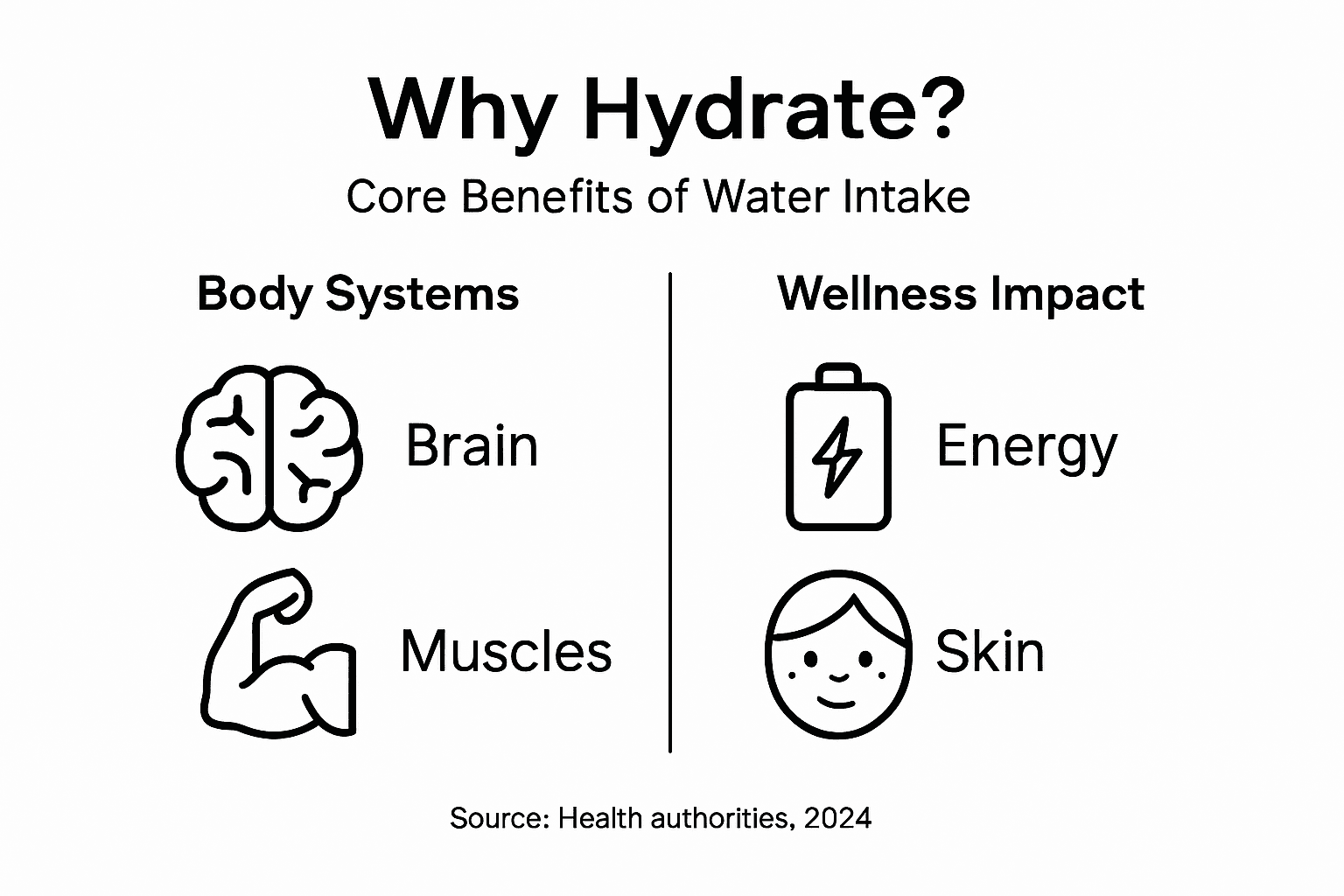
- Brain: Approximately 75% water
- Lungs: Around 83% water
- Heart: Roughly 73% water
- Muscles: About 79% water
- Bones: Approximately 31% water
Beyond physical structure, water supports numerous metabolic processes. It enables enzymatic reactions, helps maintain electrolyte balance, and facilitates hormone and nutrient transportation. Proper hydration ensures these intricate systems function optimally, supporting overall physiological health and wellness.

Pro tip: Monitor your urine color as a quick hydration status indicator - pale yellow suggests good hydration, while dark yellow signals potential dehydration.
Daily Intake Recommendations and Variations
Daily water intake recommendations are not a one-size-fits-all approach but a nuanced consideration of individual physiological needs. Multiple factors influence how much water an individual should consume, making personalized hydration strategies essential for optimal health.
The National Academy of Medicine provides general guidelines for daily fluid intake:
- Men: Approximately 13 cups per day
- Women: Approximately 9 cups per day
- Pregnant women: Additional fluid requirements
- Breastfeeding women: Increased hydration needs
Critical factors that modify individual water intake requirements include:
- Physical activity level
- Climate and environmental temperature
- Overall health status
- Body weight and composition
- Dietary habits and food moisture content
Beyond standard recommendations, hydration needs vary significantly based on individual circumstances. Athletes, people living in hot climates, and individuals with certain medical conditions may require substantially more fluid intake to maintain optimal bodily functions.
Water intake is not just about drinking liquids, but consuming water-rich foods and understanding your body’s unique signals.
Professional health experts suggest monitoring personal hydration through indicators like urine color, energy levels, and physical performance. These personalized markers can help individuals fine-tune their daily water consumption more accurately than generic recommendations.
Pro tip: Carry a reusable water bottle marked with hourly intake goals to help track and gradually increase your daily water consumption.
Common Hydration Myths and Facts
Hydration myths persist despite scientific evidence that challenge traditional beliefs about water consumption. Understanding the truth behind these misconceptions can help individuals develop more effective personal hydration strategies.
Widely circulated hydration myths include:
- Myth: Everyone needs exactly 8 glasses of water daily
- Myth: Caffeine always causes dehydration
- Myth: Clear urine guarantees perfect hydration
- Myth: Sports drinks are necessary for routine hydration
- Myth: Thirst is an unreliable hydration indicator
Reality often differs dramatically from these oversimplified assumptions. Individual hydration needs vary significantly based on multiple factors such as body composition, physical activity, climate, and overall health status. What works for one person may not be appropriate for another.
Key hydration facts to remember:
- Water requirements depend on personal physiology
- Moderate caffeine consumption does not cause dehydration
- Fluid intake comes from multiple sources, not just water
- Body signals are more complex than simple color indicators
- Personalized approaches trump generic recommendations
Hydration is a nuanced process that requires understanding your body’s unique signals and needs.
Professional health experts emphasize that hydration strategies should be tailored to individual lifestyles, recognizing that fluid intake involves complex physiological mechanisms beyond basic water consumption.
Pro tip: Track your personal hydration by monitoring energy levels, urine color, and physical performance rather than strictly adhering to generic guidelines.
Risks of Dehydration for Busy Adults
Cognitive performance suffers dramatically with dehydration, particularly for professionals navigating demanding work environments. Even mild fluid loss can significantly impair sustained attention and increase likelihood of errors during complex tasks.
Busy adults face multiple dehydration risks:
- Increased cognitive fatigue
- Reduced concentration levels
- Higher potential for workplace mistakes
- Compromised decision-making abilities
- Physical performance degradation
Symptoms of emerging dehydration often manifest subtly:
- Persistent headaches
- Unexpected mood fluctuations
- Decreased mental clarity
- Sudden energy drops
- Difficulty maintaining focus
Professional productivity depends critically on maintaining proper hydration levels.
Chronic dehydration raises serious health complications, including potential long-term risks such as kidney stones, urinary tract infections, and gradual cognitive decline. Professionals must recognize that hydration is not merely about drinking water, but sustaining optimal physiological functioning.
Below is a summary of daily hydration impacts on major body systems:
| Body System | Hydration Benefit | Dehydration Impact |
|---|---|---|
| Nervous System | Supports cognitive clarity | Reduced focus, brain fatigue |
| Muscular System | Maintains muscle function | Cramps, decreased endurance |
| Urinary System | Enhances waste removal | Higher risk of kidney stones |
| Digestive System | Aids nutrient absorption | Constipation, sluggish gut |
| Cardiovascular System | Promotes blood circulation | Increases heart workload |
Pro tip: Set digital reminders on your phone or smartwatch to take hydration breaks every 90 minutes during work hours.
Effective Hydration Tools and Wellness Solutions
Innovative hydration strategies transform personal wellness by providing practical approaches to tracking and improving daily fluid intake. Modern tools and techniques offer sophisticated solutions for maintaining optimal hydration levels.
Effective hydration tools encompass multiple strategies:
- Digital hydration tracking apps
- Smart water bottles with intake reminders
- Personalized hydration recommendation systems
- Electrolyte monitoring technologies
- Wearable devices with hydration alerts
Key wellness solutions focus on creating sustainable hydration habits:
- Setting hourly water consumption goals
- Using smartphone reminder systems
- Integrating natural flavor enhancers
- Tracking daily fluid intake patterns
- Understanding individual hydration requirements
Technological innovations are revolutionizing how we understand and manage personal hydration needs.
Advanced analytics support personalized hydration strategies by utilizing artificial intelligence to create targeted wellness recommendations. These data-driven approaches help individuals develop more nuanced understanding of their unique physiological requirements.
Pro tip: Invest in a smart water bottle with integrated tracking technology to automatically log your daily water consumption and receive personalized hydration insights.
Here’s a quick comparison of hydration tracking methods and their effectiveness:
| Tracking Method | Ease of Use | Customization Level | Key Benefit |
|---|---|---|---|
| Hydration Apps | Simple digital input | Highly customizable goals | Real-time reminders and analytics |
| Smart Water Bottles | Automatic tracking | Limited goal personalization | Seamless intake monitoring |
| Manual Journaling | Requires discipline | Fully flexible | Promotes mindful water consumption |
| Wearables with Alerts | Hands-free reminders | Adjustable notification | Integrates with health data |
Take Charge of Your Hydration for Everyday Wellness
Struggling to maintain proper hydration while managing a busy lifestyle is a common challenge highlighted in the article. Dehydration can silently impact your focus, energy, and overall wellbeing. The key is building consistent hydration habits supported by the right tools. Whether you want to track your water intake, enjoy functional beverages that boost wellness, or find beautiful and convenient hydration bottlessustainable hydration solutions, Myequa.com has you covered.
Start transforming your daily water intake habits today. Explore our wide selection of BPA-free and stainless steel hydration bottles, wellness drinks like matcha, and smart accessories designed to keep you refreshed and energized. Take advantage of our Black Friday deals with discounts up to 70 percent to invest in your health now. Visit Myequa and embrace a lifestyle that supports your unique hydration needs for greater clarity, vitality, and wellness.
Frequently Asked Questions
How much water should I drink daily for optimal health?
Adults generally require approximately 1.5-2 liters of water per day. However, individual needs can vary based on factors such as physical activity level, climate, overall health, and diet.
What are the primary functions of water in the body?
Water plays crucial roles in temperature regulation, nutrient transportation, waste elimination, joint lubrication, and maintaining cellular structure. It is vital for numerous metabolic processes in the body.
Can I rely solely on thirst to determine my hydration needs?
No, thirst is not always an accurate indicator of hydration status. By the time you feel thirsty, you may already be mildly dehydrated. It’s important to proactively monitor and maintain fluid intake throughout the day.
What are some effective strategies for staying hydrated?
Practical strategies include keeping a reusable water bottle handy, setting reminders to drink water regularly, integrating water-rich foods into your diet, and monitoring urine color to gauge hydration status.
Recommended
- Why Sustainable Hydration Matters for Modern Wellness – EQUA - Sustainable Water Bottles
- Why Prioritize Hydration: Wellness, Energy, and Resilience – EQUA - Sustainable Water Bottles
- Wellness Drinking: How It Impacts Your Health Choices – EQUA - Sustainable Water Bottles
- Do You Feel Thirsty? – EQUA - Sustainable Water Bottles
https://www.facebook.com/VitaminsForMaleEnhancement.2026
https://www.facebook.com/events/773080091895959/
https://www.facebook.com/events/2024892901410386/
https://www.facebook.com/events/1769467883734829/
https://www.facebook.com/groups/vitaminsformaleenhancement
https://www.facebook.com/groups/vitaminsformaleenhancement.2026
https://www.facebook.com/groups/vitaminsformaleenhancement.new
https://scribehow.com/viewer/Vitamins_For_Male_Enhancement__Expert_Review_Is_It_Worth_Your_Money__fcszP_FVQXO99qbE37PPFQ
https://scribehow.com/viewer/Vitamins_For_Male_Enhancement_Is_It_Safe_Read_Experts_Opinion__Ly4rtWVCTsq9aJCd_L7_cA
https://scribehow.com/viewer/Vitamins_For_Male_Enhancement_Reviews_Cost_Scam_Exposed__97Qq05TDTou7ksK7Gjd4sQ
https://scribehow.com/viewer/Vitamins_For_Male_Enhancement_Can_It_Really_Improve_Your_Confidence__xNVSoG0uTe-Eiolqra8QTQ
https://scribehow.com/viewer/Vitamins_For_Male_Enhancement_For_Sexual_Health__XkKRGod2RbCPN9F659qcLg
https://vitaminsformaleenhancement.zohodesk.com/portal/en/kb/articles/vitamins-for-male-enhancement-for-sexual-health
https://vitaminsformaleenhancement.zohodesk.com/portal/en/kb/articles/vitamins-for-male-enhancement-can-it-really-improve-your-confidence
https://vitaminsformaleenhancement.zohodesk.com/portal/en/kb/articles/vitamins-for-male-enhancement-reviews-cost-scam-exposed
https://vitaminsformaleenhancement.zohodesk.com/portal/en/kb/articles/vitamins-for-male-enhancement-is-it-safe-read-experts-opinion
https://vitaminsformaleenhancement.zohodesk.com/portal/en/kb/articles/vitamins-for-male-enhancement-expert-review-is-it-worth-your-money
https://contra.com/community/11NT0m1U-discover-effective-vitamins-for-male-enhancement
https://contra.com/community/5PsvXp3Z-guide-to-vitamins-for-mens-sexual
https://contra.com/community/nVmeLMyY-vitamins-for-male-enhancement-reviews-cost
https://contra.com/community/bq746EF8-vitamins-for-male-enhancement-is-it
https://contra.com/community/s19tGaBV-natural-vitamins-for-male-enhancement-expert
https://vitaminsformaleenhancement.alboompro.com/vitamins-for-male-enhancement
https://ollama.com/Vitamins-For-Male/Vitaminsusa
https://github.com/MichealLKean/Vitamins-For-Male-Enhancement-Can-It-Really-Improve-Your-Confidence
https://www.facebook.com/VitaminsForMaleEnhancement.2026
https://www.facebook.com/events/773080091895959/
https://www.facebook.com/events/2024892901410386/
https://www.facebook.com/events/1769467883734829/
https://www.facebook.com/groups/vitaminsformaleenhancement
https://www.facebook.com/groups/vitaminsformaleenhancement.2026
https://www.facebook.com/groups/vitaminsformaleenhancement.new
https://scribehow.com/viewer/Vitamins_For_Male_Enhancement__Expert_Review_Is_It_Worth_Your_Money__fcszP_FVQXO99qbE37PPFQ
https://scribehow.com/viewer/Vitamins_For_Male_Enhancement_Is_It_Safe_Read_Experts_Opinion__Ly4rtWVCTsq9aJCd_L7_cA
https://scribehow.com/viewer/Vitamins_For_Male_Enhancement_Reviews_Cost_Scam_Exposed__97Qq05TDTou7ksK7Gjd4sQ
https://scribehow.com/viewer/Vitamins_For_Male_Enhancement_Can_It_Really_Improve_Your_Confidence__xNVSoG0uTe-Eiolqra8QTQ
https://scribehow.com/viewer/Vitamins_For_Male_Enhancement_For_Sexual_Health__XkKRGod2RbCPN9F659qcLg
https://vitaminsformaleenhancement.zohodesk.com/portal/en/kb/articles/vitamins-for-male-enhancement-for-sexual-health
https://vitaminsformaleenhancement.zohodesk.com/portal/en/kb/articles/vitamins-for-male-enhancement-can-it-really-improve-your-confidence
https://vitaminsformaleenhancement.zohodesk.com/portal/en/kb/articles/vitamins-for-male-enhancement-reviews-cost-scam-exposed
https://vitaminsformaleenhancement.zohodesk.com/portal/en/kb/articles/vitamins-for-male-enhancement-is-it-safe-read-experts-opinion
https://vitaminsformaleenhancement.zohodesk.com/portal/en/kb/articles/vitamins-for-male-enhancement-expert-review-is-it-worth-your-money
https://contra.com/community/11NT0m1U-discover-effective-vitamins-for-male-enhancement
https://contra.com/community/5PsvXp3Z-guide-to-vitamins-for-mens-sexual
https://contra.com/community/nVmeLMyY-vitamins-for-male-enhancement-reviews-cost
https://contra.com/community/bq746EF8-vitamins-for-male-enhancement-is-it
https://contra.com/community/s19tGaBV-natural-vitamins-for-male-enhancement-expert
https://vitaminsformaleenhancement.alboompro.com/vitamins-for-male-enhancement
https://ollama.com/Vitamins-For-Male/Vitaminsusa
https://github.com/MichealLKean/Vitamins-For-Male-Enhancement-Can-It-Really-Improve-Your-Confidence
