


Why Prioritize Hydration: Wellness, Energy, and Resilience
Most advice about hydration gets it wrong, with many American and European adults still believing the eight-glass rule covers everyone’s needs. Staying hydrated is key for anyone seeking better focus, energy, and overall wellness, especially during busy periods and Black Friday shopping. Understanding the science behind hydration and the real differences among solutions can help you avoid common myths and find products that truly support your healthy lifestyle. Nearly 60% of the adult body is water, showing just how vital balance is for both mind and body.
Table of Contents
- Hydration Defined and Common Misconceptions
- Types of Hydration Solutions and Their Benefits
- Hydration’s Role in Physical and Mental Health
- Risks of Dehydration and How to Avoid Them
- Comparing Hydration Alternatives for Wellness
Key Takeaways
| Point | Details |
|---|---|
| Hydration Complexity | Hydration involves more than just drinking water; it requires understanding individual needs based on factors such as age, activity level, and climate. |
| Types of Hydration Solutions | Various hydration solutions exist, including water-based drinks and electrolyte beverages, each serving specific purposes for different activities. |
| Health Impact of Hydration | Proper hydration is critical for mental and physical health, affecting cognitive performance and metabolic functions. |
| Dehydration Risks | Dehydration poses serious health risks and can often go unnoticed; proactive monitoring and tailored hydration strategies are essential for prevention. |
Hydration Defined and Common Misconceptions
Hydration is far more complex than simply drinking water. It represents a sophisticated physiological process where your body maintains optimal fluid balance through multiple mechanisms. Understanding hydration myths and facts requires moving beyond simplistic one-size-fits-all recommendations.
Contrary to popular belief, hydration isn’t just about consuming eight glasses of water daily. Experts now recognize that individual hydration needs vary dramatically based on factors like age, activity level, climate, and overall health. Water intake comes from diverse sources including foods, other beverages, and metabolic processes. Some fruits and vegetables contain up to 90% water, contributing significantly to daily fluid requirements.
Common hydration misconceptions persist despite scientific evidence. Many people believe that thirst is an unreliable hydration indicator, but research suggests the human body’s thirst mechanism is actually quite sophisticated. Comprehensive medical research demonstrates that our physiological signals are more nuanced than previously understood. Chronic mild dehydration can manifest through subtle symptoms like reduced cognitive performance, decreased energy levels, and impaired metabolic function.
Pro Tip: Track your daily fluid intake by using a simple smartphone app or keeping a reusable water bottle with measurement markings to ensure consistent hydration throughout the day.
Types of Hydration Solutions and Their Benefits
Hydration solutions are far more nuanced than simply drinking water. Modern research reveals multiple strategies for maintaining optimal fluid balance, each tailored to specific physiological needs and performance goals. Comparative studies of oral rehydration solutions demonstrate significant variations in electrolyte and nutrient compositions that can dramatically impact hydration effectiveness.
Three primary categories of hydration solutions emerge: water-based drinks, electrolyte-enhanced beverages, and specialized performance formulas. Water remains the fundamental hydration source, but sports drinks and electrolyte solutions offer targeted benefits for specific scenarios. Advanced hydration research from military performance studies indicates that carbohydrate and electrolyte content can substantially influence fluid absorption and physiological performance.
Electrolyte solutions provide critical advantages beyond basic water intake. These formulations typically include sodium, potassium, magnesium, and other minerals that support cellular function and rapid fluid restoration. Glucose-based and amino acid-enhanced solutions demonstrate superior fluid retention compared to sugar-free alternatives, making them particularly effective for athletes, outdoor workers, and individuals experiencing intense physical activity or heat exposure.
Pro Tip: Select hydration solutions based on your specific activity level and environmental conditions, rotating between water and electrolyte drinks to maintain optimal fluid balance.
Here’s how different hydration solutions compare in key features:
| Solution Type | Primary Benefit | Key Ingredients | Best For |
|---|---|---|---|
| Water-based Drinks | Basic fluid replacement | Water | Daily hydration |
| Electrolyte Beverages | Faster rehydration, mineral loss | Sodium, potassium, magnesium | Athletes, outdoor workers |
| Performance Formulas | Enhanced absorption, energy | Carbohydrates, amino acids | Endurance sports, intense exertion |
Hydration’s Role in Physical and Mental Health
Hydration profoundly impacts both physical and mental functioning, extending far beyond simple fluid replacement. Comprehensive research on water’s neurological influences reveals intricate connections between fluid intake and cognitive performance, demonstrating how even mild dehydration can significantly disrupt mental processes and emotional regulation.
At the cellular level, proper hydration supports critical neurological functions. Water plays a fundamental role in neurotransmitter production, cerebral blood flow, and maintaining optimal brain cell performance. When hydration levels drop, cognitive abilities such as concentration, memory retrieval, and decision-making speed can become compromised. Mental fatigue, mood fluctuations, and reduced cognitive flexibility often emerge as direct consequences of insufficient fluid intake.

Physical and mental health are deeply interconnected through hydration mechanisms. Optimal fluid balance helps regulate body temperature, support metabolic processes, and maintain cardiovascular efficiency. For individuals experiencing stress, depression, or anxiety, maintaining consistent hydration can provide subtle yet meaningful improvements in emotional resilience and overall mental well-being. The body’s complex physiological systems rely on adequate water intake to function smoothly, creating a holistic impact that transcends simple physical performance.
Pro Tip: Monitor your hydration status by checking urine color and establishing a consistent daily water intake routine that adapts to your activity level and environmental conditions.
Risks of Dehydration and How to Avoid Them
Dehydration represents a significant health risk that extends beyond simple thirst, potentially compromising multiple bodily systems. Comprehensive clinical research on dehydration risks reveals a complex landscape of warning signs and potential health complications that demand proactive management and early recognition.
Vulnerable populations face heightened dehydration risks, including infants, elderly individuals, athletes, and those with chronic health conditions. These groups experience more rapid fluid loss and reduced physiological capacity to maintain proper hydration levels. Symptoms range from subtle indicators like mild fatigue and decreased cognitive performance to more severe manifestations such as dizziness, rapid heartbeat, and impaired organ function. Environmental factors like extreme temperatures, high-altitude environments, and intense physical activity can dramatically accelerate fluid loss and increase dehydration potential.
Worldwide prevention strategies from medical research emphasize systematic approaches to maintaining fluid balance. Practical interventions include monitoring urine color, establishing consistent hydration routines, consuming electrolyte-rich foods, and adjusting fluid intake based on activity levels and environmental conditions. Understanding individual hydration needs and recognizing early warning signs can prevent potentially serious health complications and maintain optimal physiological functioning.
Below is a summary of dehydration risk factors and prevention strategies:
| Risk Group | Major Risk Factor | Early Sign | Prevention Strategy |
|---|---|---|---|
| Infants | Rapid fluid loss | Lethargy | Frequent fluid monitoring |
| Elderly Individuals | Lower thirst sensation | Dizziness | Scheduled fluid intake |
| Athletes | Excessive sweating | Muscle cramps | Electrolyte drinks during activity |
| Chronic Health Issues | Medication effects | Confusion | Consult with healthcare provider |
Pro Tip: Create a personalized hydration tracking system using smartphone apps or simple daily checklists to ensure consistent fluid intake throughout different activities and environmental conditions.
Comparing Hydration Alternatives for Wellness
Hydration solutions extend far beyond traditional water consumption, offering diverse options tailored to individual wellness needs. Contemporary nutrition science reveals that optimal hydration strategies are not universal but depend on personal physiological requirements, lifestyle demands, and specific health contexts.
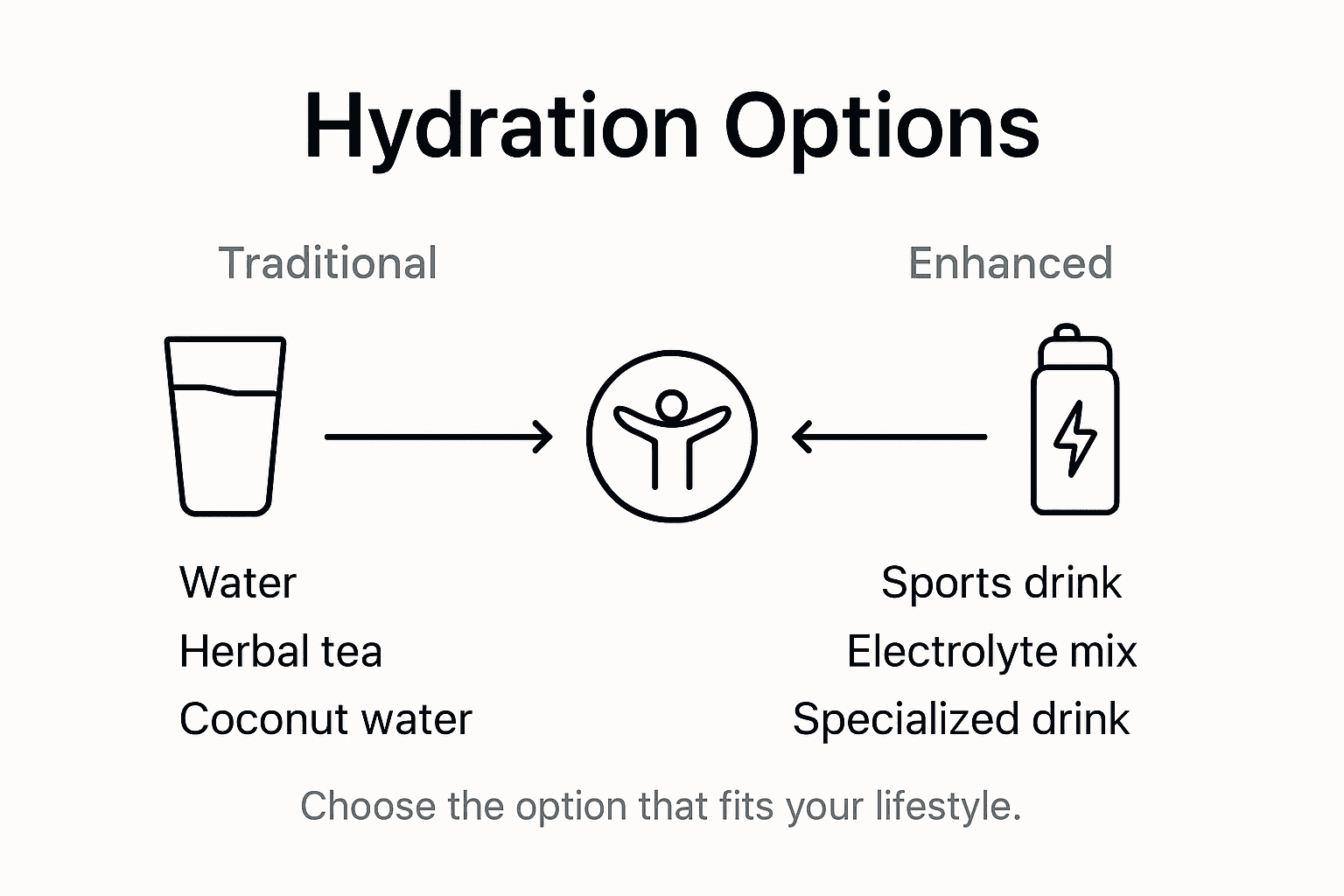
Traditional water remains the foundational hydration source, but emerging alternatives provide targeted benefits. Electrolyte-enhanced beverages support athletes and active individuals by replacing minerals lost through sweat. Herbal infusions offer additional antioxidant benefits, while coconut water provides natural electrolytes. Functional drinks enriched with vitamins and minerals can address specific nutritional gaps, making hydration a more holistic wellness strategy beyond simple fluid replacement.
The effectiveness of hydration alternatives varies based on individual metabolic profiles, activity levels, and health objectives. Young athletes might benefit from sports drinks with higher electrolyte concentrations, while older adults may require gentler, mineral-rich options that support cardiovascular and cellular health. Factors like sugar content, artificial additives, and overall nutritional composition become critical when selecting hydration solutions that align with personal wellness goals.
Pro Tip: Experiment with different hydration alternatives by maintaining a weekly rotation that allows you to assess how various drinks impact your energy, cognitive performance, and overall well-being.
Elevate Your Hydration Habits for Lasting Wellness and Energy
Staying properly hydrated is essential for maintaining your physical and mental health while boosting your energy and resilience throughout the day. As the article explains, understanding your unique hydration needs and choosing the right hydration solutions can help you avoid common pitfalls such as dehydration and cognitive fatigue. Whether you are an athlete, busy professional, or wellness enthusiast, using high-quality hydration tools and beverages makes all the difference in sustaining optimal performance and emotional balance.
Start transforming your hydration routine today by exploring sustainable, BPA-free hydration options with DRINKS – EQUA - Sustainable Water Bottles.

Take advantage of unbeatable Black Friday deals on premium wellness essentials at Myequa.com. Shop now to secure eco-friendly bottles and functional drinks designed to support your wellness journey. Prioritize your hydration and well-being this season by choosing products that empower you to feel energized, focused, and resilient every day.
Frequently Asked Questions
What is hydration, and why is it important for wellness?
Hydration is the process of maintaining optimal fluid balance in the body. It’s crucial for wellness as it supports physical performance, cognitive function, and overall health.
How can I track my daily hydration intake effectively?
You can track your daily hydration intake by using a smartphone app or keeping a reusable water bottle with measurement markings to monitor your fluid consumption.
What are the different types of hydration solutions available, and how do they differ?
The primary types of hydration solutions include water-based drinks, electrolyte-enhanced beverages, and specialized performance formulas. Water provides basic hydration, while electrolyte drinks replenish minerals lost during physical activity, and performance formulas offer enhanced absorption and energy for intense exertion.
What are the risks of dehydration, and how can I avoid them?
Dehydration can lead to symptoms like fatigue, dizziness, and impaired organ function. To avoid dehydration, ensure regular fluid intake, monitor urine color, and adapt your hydration routine to activity levels and environmental conditions.
Recommended
Zdieľať
